Discover, assess risk levels, and govern open-source models before they introduce enterprise risk.
Open-source models accelerate AI development, but enterprises need a scalable way to determine which models are trustworthy, where they are used, and whether they meet security and governance requirements.
Teams can download and incorporate open-source models from public repositories with little security review, creating uncertainty around provenance, licensing, embedded weaknesses, unsafe behavior, and downstream dependencies. A model may be reused across multiple applications or workflows before security teams know it exists, while manual review cannot keep pace with the scale of public model ecosystems. Without centralized discovery, model-specific risk intelligence, security testing, and deployment context, organizations can struggle to distinguish approved models from unknown or high-risk components and may lack the evidence needed to make consistent adoption decisions.
Create a repeatable model-governance process that combines discovery, risk intelligence, security testing, deployment context, and approval workflows.
1. Discover open-source models. Identify models across AI development platforms and enterprise projects, then add them to a centralized inventory with provenance, lineage, licensing, and connected-resource context.
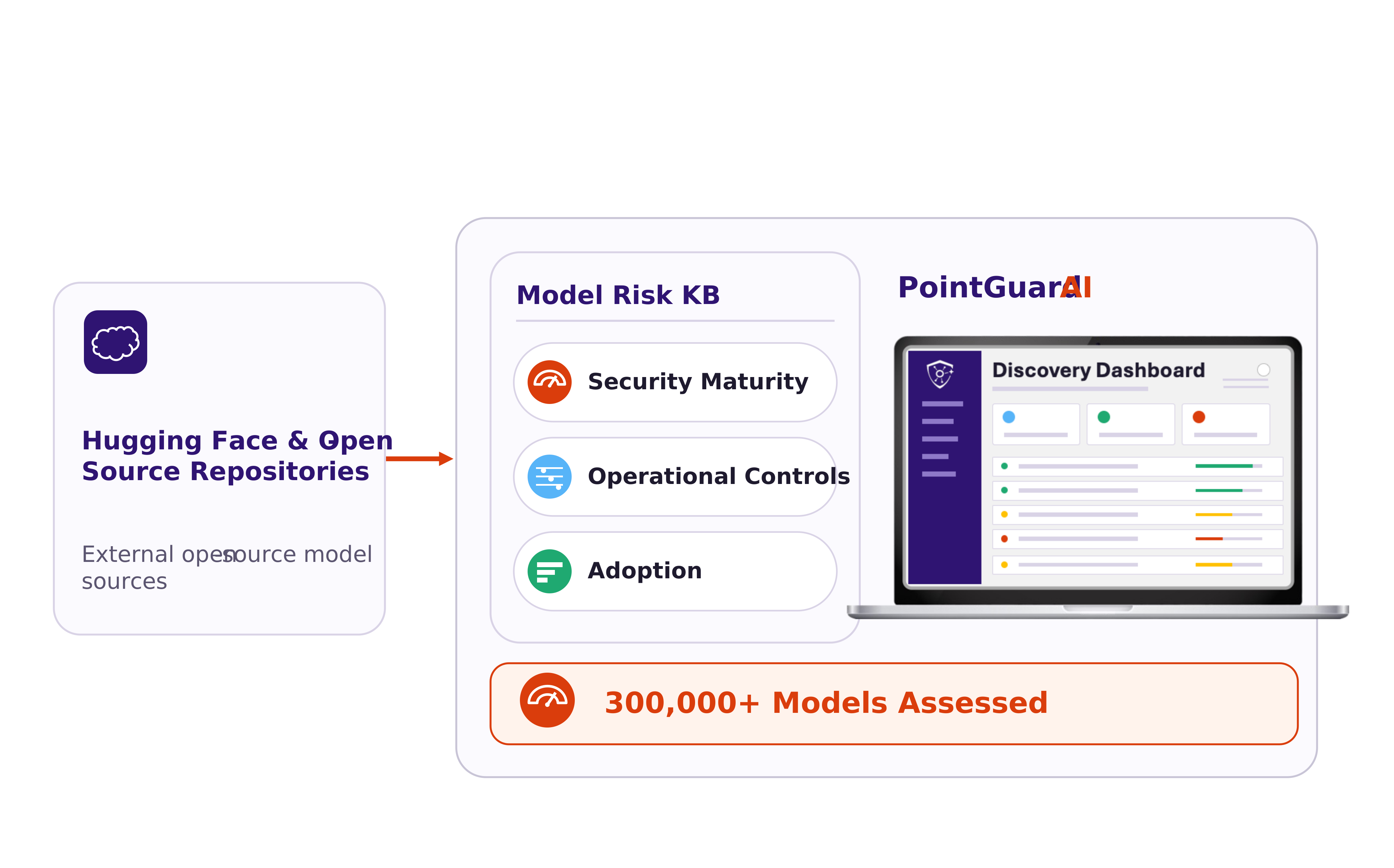
2. Check the Model Risk Knowledge Base. Compare discovered models against the PointGuard AI Model Risk Knowledge Base, which has assessed over 300,000 open-source models and provides risk intelligence to help teams identify higher-risk components before adoption.
3. Test model security. Use automated scanning and red teaming to evaluate models for vulnerabilities, embedded malware, prompt injection exposure, toxicity, bias, unsafe behavior, and other weaknesses.
4. Assess deployment context. Identify AI-specific misconfigurations, unsafe access policies, and supply-chain relationships that can increase the risk of an otherwise acceptable model.
5. Govern approval and remediation. Route models through approval or exception workflows, prioritize remediation based on risk and business context, and track where approved or restricted models are used.
Together, these steps give security and AI governance teams an evidence-based way to adopt open-source models without sacrificing visibility, speed, or control.
PointGuard AI provides a complete solution for this use case using these capabilities:
• AI Discovery & Inventory: discovers models and tracks provenance, licensing, lineage, risk ratings, connected applications, and model knowledge-base intelligence.
• AI Red Teaming: tests models for vulnerabilities, embedded malware, prompt injection risk, toxicity, bias, unsafe behavior, and adversarial weaknesses.
• AI Security Posture Management: identifies AI-specific misconfigurations, unsafe access policies, and security flaws across MLOps environments.
• AI Supply Chain Security: maps dependencies and risk across open-source models, datasets, libraries, and connected applications to support prioritization and remediation.