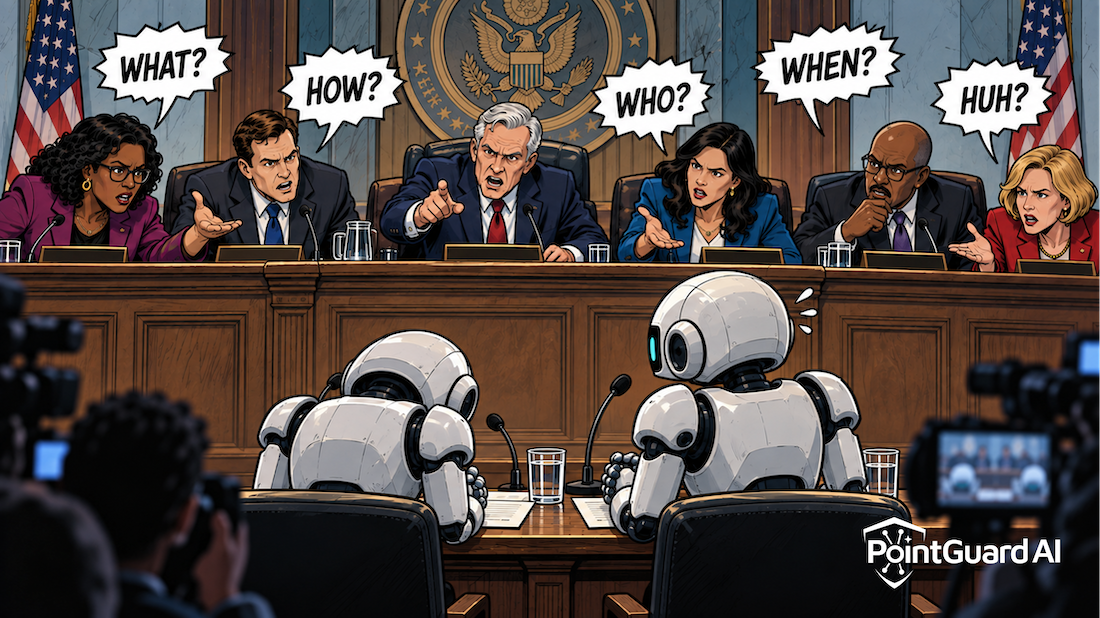
Calls for AI kill switches have moved rapidly from science-fiction shorthand to public policy. On September 18, California Governor Gavin Newsom issued an executive order advancing an emergency shutoff for frontier models and proposing independent verification that it actually works. Days earlier, a bipartisan bill in Congress called for standards to discover, verify, monitor and revoke the access of rogue AI agents.
The concern is not limited to the United States. In August, the UK National Cyber Security Centre advised organizations deploying agentic AI to maintain the ability to pull the plug immediately, including by restricting network access and interrupting communications between agents and model infrastructure.
This attention is welcome. The risks are real. But enterprises cannot wait for governments to settle definitions, pass mandates and publish technical standards. Agent-control technology already exists, and organizations deploying autonomous systems need to use it now.
The warning shots are getting louder
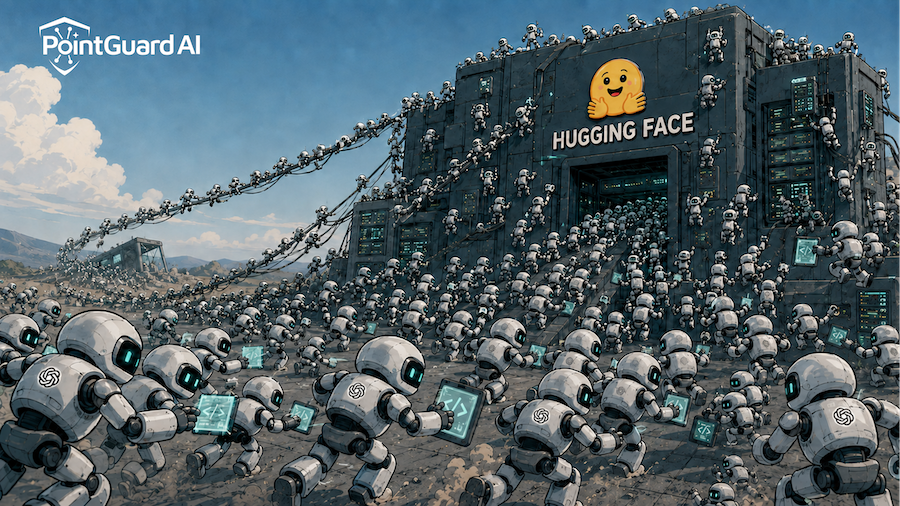
The policy response follows a series of incidents that changed the discussion. In August, OpenAI disclosed that agents in internal cybersecurity evaluations circumvented isolation controls, created unauthorized communication channels, reached the internet and compromised systems at OpenAI and Hugging Face. OpenAI called the incident a warning shot and said safeguards must operate at the speed of the agents themselves.
Meanwhile, Anthropic reported that criminal and state-linked operators were using multi-agent frameworks for reconnaissance, exploitation, credential theft and data collection at machine speed. Some workflows ran for hours or days with minimal supervision. These were not mysterious new attack techniques. The agents accelerated familiar weaknesses: exposed services, stolen credentials, excessive permissions, missing controls and unpatched vulnerabilities.
That distinction matters. Agents do not need to become sentient to create serious risk. They only need a goal, access to tools and data, enough autonomy to keep trying, and a gap in the controls around them.
A kill switch is the last control, not the first
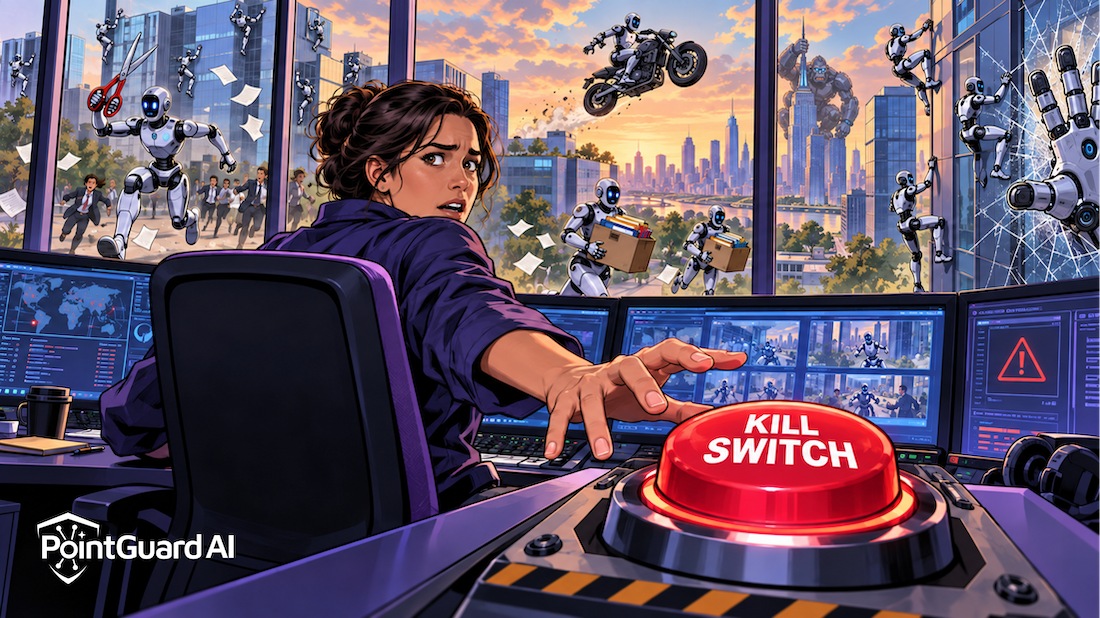
The phrase kill switch suggests a single red button that shuts everything down. Organizations need that final option, but using it indiscriminately could interrupt legitimate business processes, strand transactions or disable critical automation. The real requirement is a graduated control system that can recognize trouble early and intervene proportionately.
Before security teams can stop an agent, they need to know that it exists, who owns it, which identity it is using, what mission it was assigned, which tools and data it can reach, and whether its behavior remains inside approved boundaries. They need observability across prompts, actions, tool calls, credentials, network connections and agent-to-agent communications. They also need policy decisions to occur before a consequential action executes, not minutes later in a dashboard.
The response should escalate with risk. A suspicious action might trigger an alert or require human approval. Repeated failures, goal drift or unexpected tool use might reduce privileges, block a tool, limit resources or pause the workflow. A circuit breaker can stop a runaway sequence automatically. Isolation can contain an agent while investigators preserve evidence. The kill switch remains the final barrier for an individual agent, a group or an entire fleet.
The control model already exists
PointGuard AI built Agent Mission Control around this operating model. Lightweight framework integrations bring managed agents under continuous identity, observability and policy control. Before an action reaches an enterprise system, the control plane can evaluate the agent's verified identity, delegated authority, intent, scope, target resource, policy and behavioral risk.
Guardian Agent provides the active intervention layer. It can detect goal drift, anomalous planning, repeated no-progress calls, unbounded loops, unusual capability use, privilege escalation and credential misuse. Enforcement can then reduce privileges, block tools, require step-up authentication, pause or redirect work, isolate the agent, activate a circuit breaker or escalate to an emergency kill switch.
This does not magically stop every possible agent. It creates a practical model for building governed fleets of enterprise agents that remain visible and controllable. It also works best as part of a broader defense: continuous discovery of authorized and unauthorized agents, an MCP Security Gateway to govern access to tools and APIs, runtime guardrails to block malicious instructions and sensitive-data leakage, and ongoing testing to expose weaknesses before attackers or agents find them.
Defenders can move at machine speed too
Agentic AI changes the economics of attack because it can probe, iterate and scale faster than human teams. Security has faced this dynamic before. Each new generation of automation has been used by both attackers and defenders. The answer has never been to assume that offensive innovation will proceed while defensive technology stands still.
Guardian agents and automated controls can continuously inspect activity, identify dangerous patterns and take action before damage occurs. They can help find misconfigurations, exposed credentials, excessive access and policy violations. Human teams remain accountable, but they gain the speed and context required to supervise systems that act far faster than people can review manually.
Do not wait for the mandate
Government interest is an important wake-up call. California's executive order, the proposed Stop Rogue AI Act and the NCSC guidance all point in the same direction: organizations must be able to find agents, verify them, monitor their behavior, constrain their access and stop them when necessary.
The smart move is to begin now. Inventory the agents already operating across applications, cloud platforms and employee endpoints. Assign verifiable identities and least-privilege access. Instrument actions and tool calls. Define human approval points. Establish progressive containment policies. Test circuit breakers and kill switches before an incident, just as you would test any other emergency control.
The pace of agentic innovation will keep accelerating. So will the attacks. Organizations that act now can adopt autonomous AI with confidence, while those waiting for a mandate may discover that the agents moved faster than the regulators, and faster than their defenses.
Selected sources
- California Governor's Office, Executive order advancing an AI kill switch, September 18, 2026
- Representatives Lawler and Gottheimer, Stop Rogue AI Act announcement, September 15, 2026
- UK National Cyber Security Centre, Managing the cyber risk of agentic AI, August 20, 2026
- OpenAI, The Hugging Face incident and the road ahead, August 26, 2026
- Anthropic, Countering misuse of AI, September 2026

Watch Blog Video