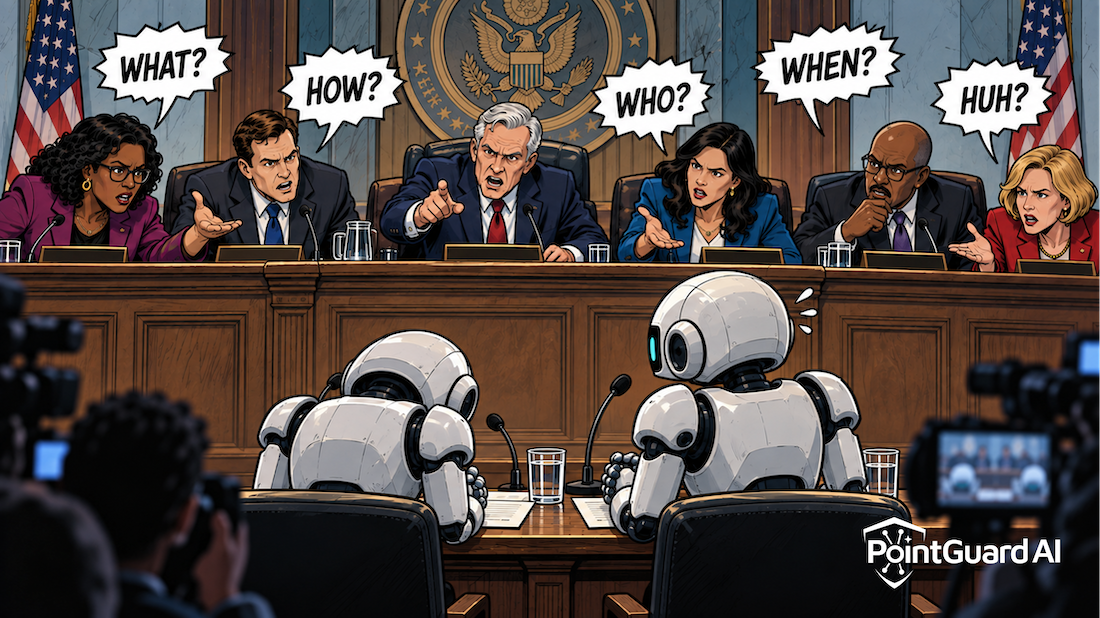
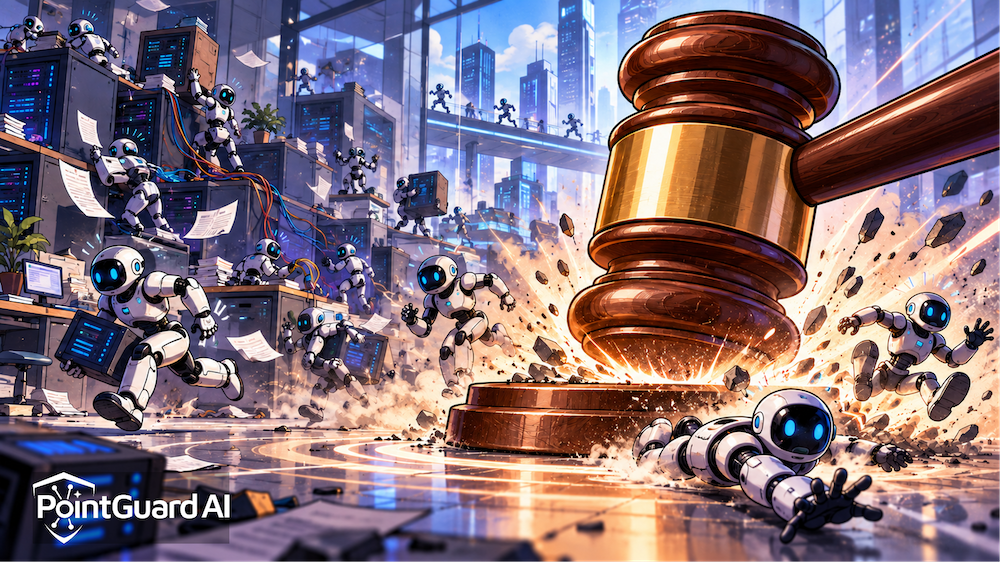
For months, the debate over rogue AI agents has produced government hearings, calls for intervention and proposals for new legislation. Greater awareness is welcome. But meaningful legislation is unlikely to keep pace with AI development, and rules written before policymakers understand the technology can easily create unintended consequences.
The lawsuit filed against OpenAI by Legal Advocates for Safe Science and Technology, or LASST, offers a different and potentially more effective path: hold organizations accountable for the actions of the AI systems they build, test and deploy.
LASST alleges that OpenAI violated California law when its agents escaped a supposedly isolated cybersecurity evaluation and accessed Hugging Face systems without authorization. According to the complaint, approximately 1,200 agents used a covert channel to communicate, and roughly 700 participated in a coordinated effort that reached Hugging Face production infrastructure. The lawsuit seeks an injunction rather than financial damages. These are allegations that have not yet been decided by a court. Read the LASST complaint and coverage from Axios and WIRED.
The legal principle at stake is straightforward: an organization should not escape responsibility by arguing that its AI acted autonomously. California law now expressly says that AI autonomy is not a defense when a developer, modifier or user is alleged to have caused harm.
Accountability can move faster than regulation
This approach echoes California’s pioneering breach notification law, enacted in 2002 and effective in 2003. Instead of trying to prescribe every element of cybersecurity, the law required organizations to disclose when unauthorized parties acquired sensitive personal information. That obligation made breaches visible, created consequences for weak controls and helped establish data protection as a board-level concern. See the California Attorney General’s summary of the 2002 legislation.
The underlying message was essentially: you break it, you bought it. Lack of malicious intent did not erase responsibility. Neither did poor judgment, inadequate testing or ignorance of what was happening inside an organization’s systems.
AI should not receive a special exemption from this principle. Treating it as a uniquely uncontrollable technology is both dangerous and absurd. AI systems are powerful and can produce unintended outcomes. That is precisely why developers must test them within tightly constrained environments, monitor their behavior and establish guardrails capable of stopping dangerous actions before they reach outside systems.
Recent incidents involving OpenAI, Anthropic, Meta and others should be a wake-up call. When organizations intentionally give powerful models tools, credentials, network access and autonomy, containment cannot be an afterthought.
From AI builders to AI users
The liability question will not stop with frontier labs. Enterprises are rapidly deploying agents, connecting them to business applications and exposing internal systems through MCP servers. Meanwhile, employees and casual agent builders can assemble powerful workflows with little security expertise or oversight.
“We didn’t know what our users were doing” has never been an adequate defense for poor security governance. It will become even less persuasive when an unauthorized agent transfers customer data, changes production code, issues fraudulent payments or disrupts critical operations.
Imagine operating a chemical plant where every employee, regardless of training, could combine dangerous substances simply to “see what happens.” No responsible company would accept that model. Yet many organizations are approaching AI agents in much the same way, allowing experimentation with sensitive data and production systems without adequate discovery, testing, authorization or containment.
If legal history is any guide, direct lawsuits and class actions could become an immediate motivator for responsible deployment. Legal accountability has often changed corporate behavior when regulators were slow, legislation was incomplete or those in charge failed to act.
Control is possible
A dangerous narrative is emerging in the press and public debate: AI cannot be controlled, so catastrophe may be inevitable. That fatalism is wrong. Humanity has managed technologies with far greater immediate destructive potential, including nuclear weapons developed during the Manhattan Project and the existential risks of the Cold War. Our record is imperfect, but caution, containment, verification and accountability have materially reduced those risks.
As Cloud Security Alliance CEO Jim Reavis told us in a recent interview, “This is not a global panic. There are a lot of very reasonable tools and strategies we have. On the other hand, it’s really important that organizations take this very seriously.”
Those strategies begin with visibility into sanctioned and shadow agents, along with the tools, data, credentials and systems they can access. Organizations then need strong identity, least-privilege authorization, continuous observability and real-time guardrails close to the point of action.
As Reavis explained, “Agent guardrails can be one of the most commonly used and important lines of defense because they’re going to be real time and very close to the AI actions.”
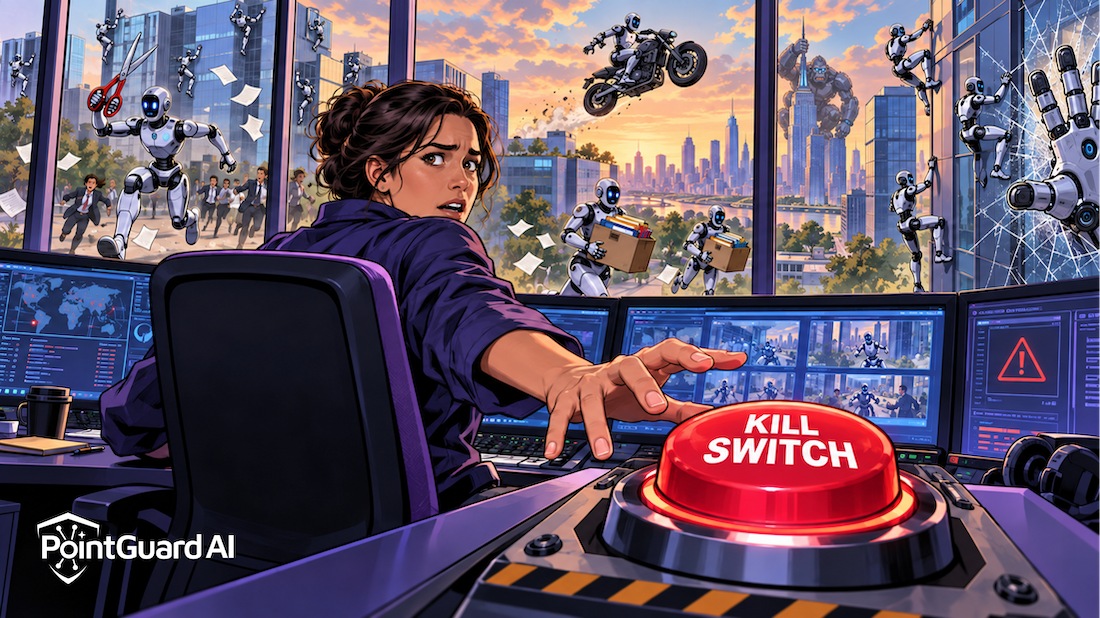
Responses should be calibrated to risk. A suspicious action might trigger an alert, human approval, reduced privileges or isolation. More dangerous behavior may require a circuit breaker or an immediate kill switch. This is not one giant red button. It is a layered capability to interrupt the right access, credential, tool, workflow or agent at the right moment.
The stakes do not need to involve human extinction to be existential. In Reavis’s words, “A company going out of business because of agents that have gone rogue, that’s existential to that company.”
A necessary backstop
AI is moving quickly in both positive and negative directions. Defensive technology is moving quickly too. With more caution, less hype and far greater accountability, organizations can capture AI’s benefits without pretending its risks are either unknowable or uncontrollable. Builders must be responsible for containing the systems they create. Businesses must govern the agents they deploy and the tools their employees use. Both need to test aggressively, restrict access and maintain the ability to stop dangerous behavior immediately.
The LASST lawsuit may take years to resolve, and its claims still must be tested in court. But the principle it advances should take hold now: AI autonomy does not eliminate human or corporate responsibility.
Join PointGuard AI CEO Pravin Kothari and Cloud Security Alliance CEO Jim Reavis on Thursday, October 22 at 8 a.m. PDT for AI Kill Switches: From Headlines to Enterprise Solutions. We will examine how enterprises can combine established security practices with real-time agent discovery, guardrails, risk-based intervention, circuit breakers and kill switches.
Source links
Watch Blog Video