Compliance Frameworks
Turn AI security findings into standards-based governance and audit evidence
.svg)
Turn AI security findings into standards-based governance and audit evidence
AI programs cross development, workforce use, data handling, and autonomous operations. Each brings different risks and evidence requirements, while security and compliance teams often work from separate inventories and reports. Manual mapping makes it harder to show which controls address a threat, who owns a finding, and whether remediation is complete.
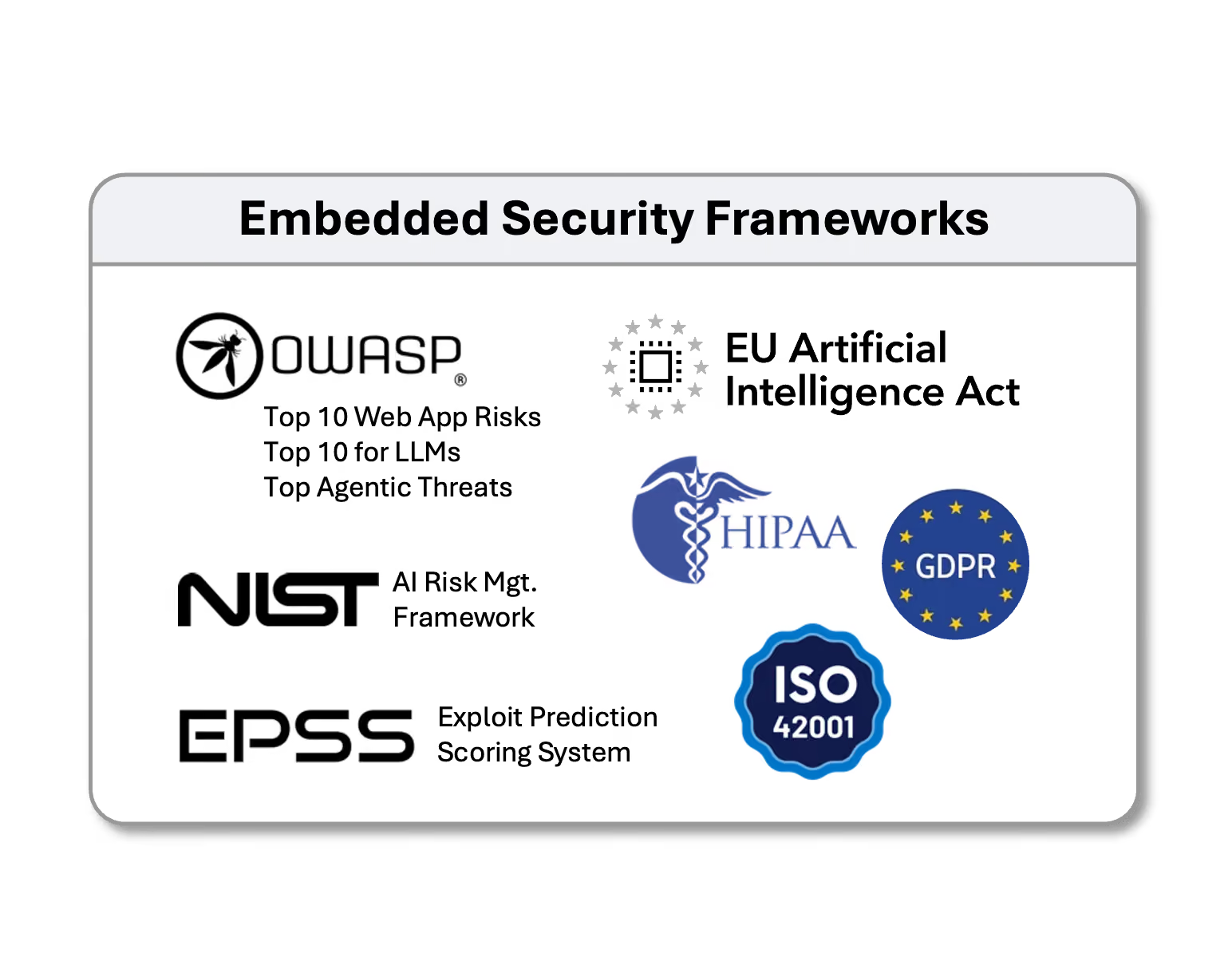
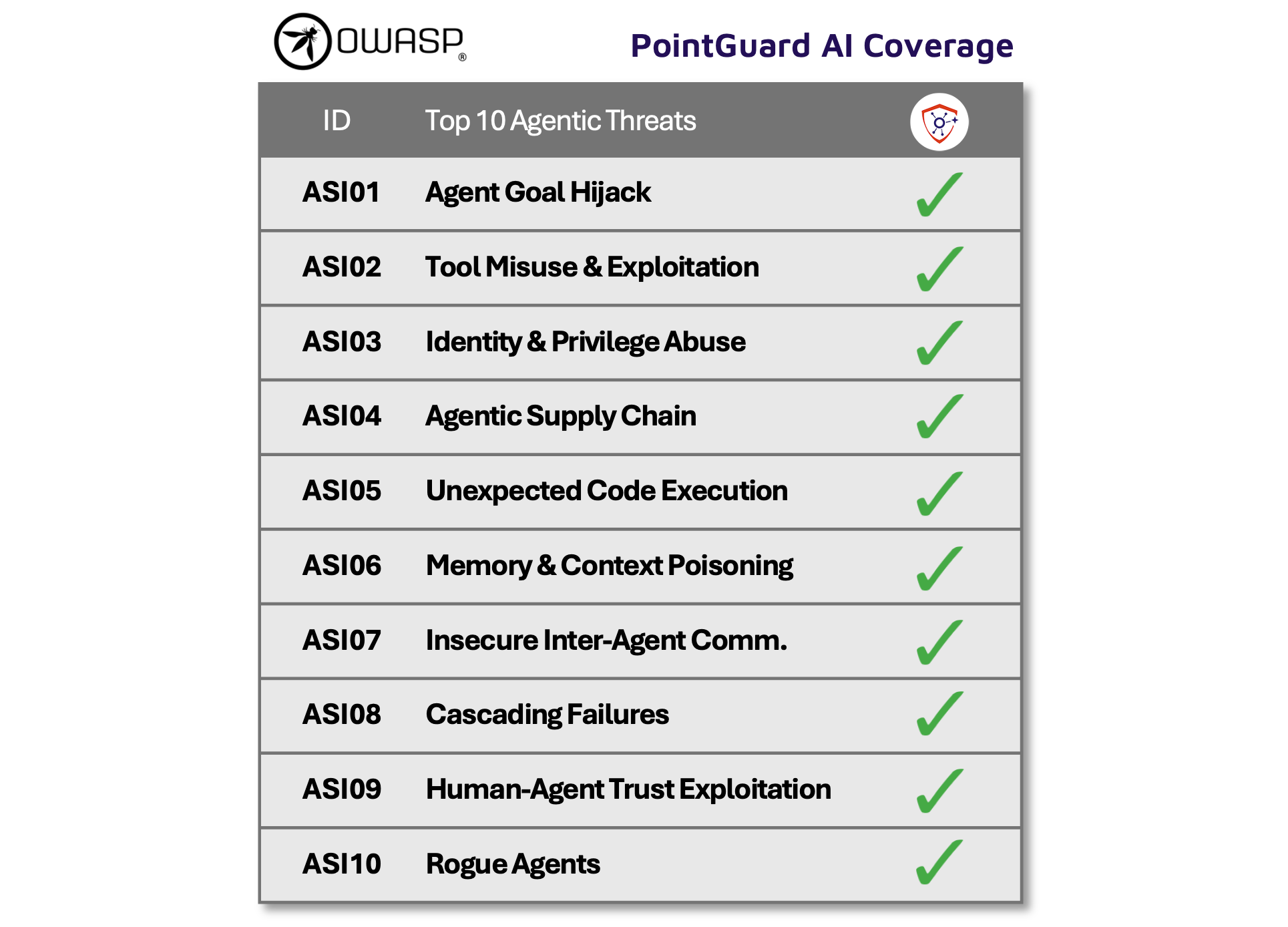
PointGuard AI connects discovery, testing, posture, runtime, data, identity, and agent findings to relevant controls in OWASP, NIST, MITRE, ISO, and regulatory programs including the EU AI Act. The platform supports controls across all ten categories in the OWASP Top 10 for Agentic Applications for 2026 and nine of ten in the OWASP GenAI LLM Top 10 2026, with mappings that show the underlying evidence.
The result is streamlined governance, consistent control language, and clearer reporting across AI systems and teams.
standards
Relate AI security findings to OWASP guidance, NIST AI RMF, MITRE ATLAS, and ISO/IEC 42001. Connect each mapping to the affected asset, control, and remediation workflow. Teams can reuse a consistent risk vocabulary across technical reviews, governance discussions, and evidence requests without translating separate reports by hand.
Map findings across major AI standards
Connect risks to relevant security controls
Maintain consistent terminology across security teams
OWASP
Use discovery, posture checks, red teaming, runtime guardrails, identity controls, data protection, and agent intervention to address the OWASP Top 10 for Agentic Applications for 2026 and OWASP GenAI LLM Top 10 2026. The platform supports controls for all ten agentic categories and nine of ten LLM categories, with evidence for each supported risk.
Address all ten agentic threat categories
Support nine distinct LLM threat categories
Trace category coverage to active controls
evidence
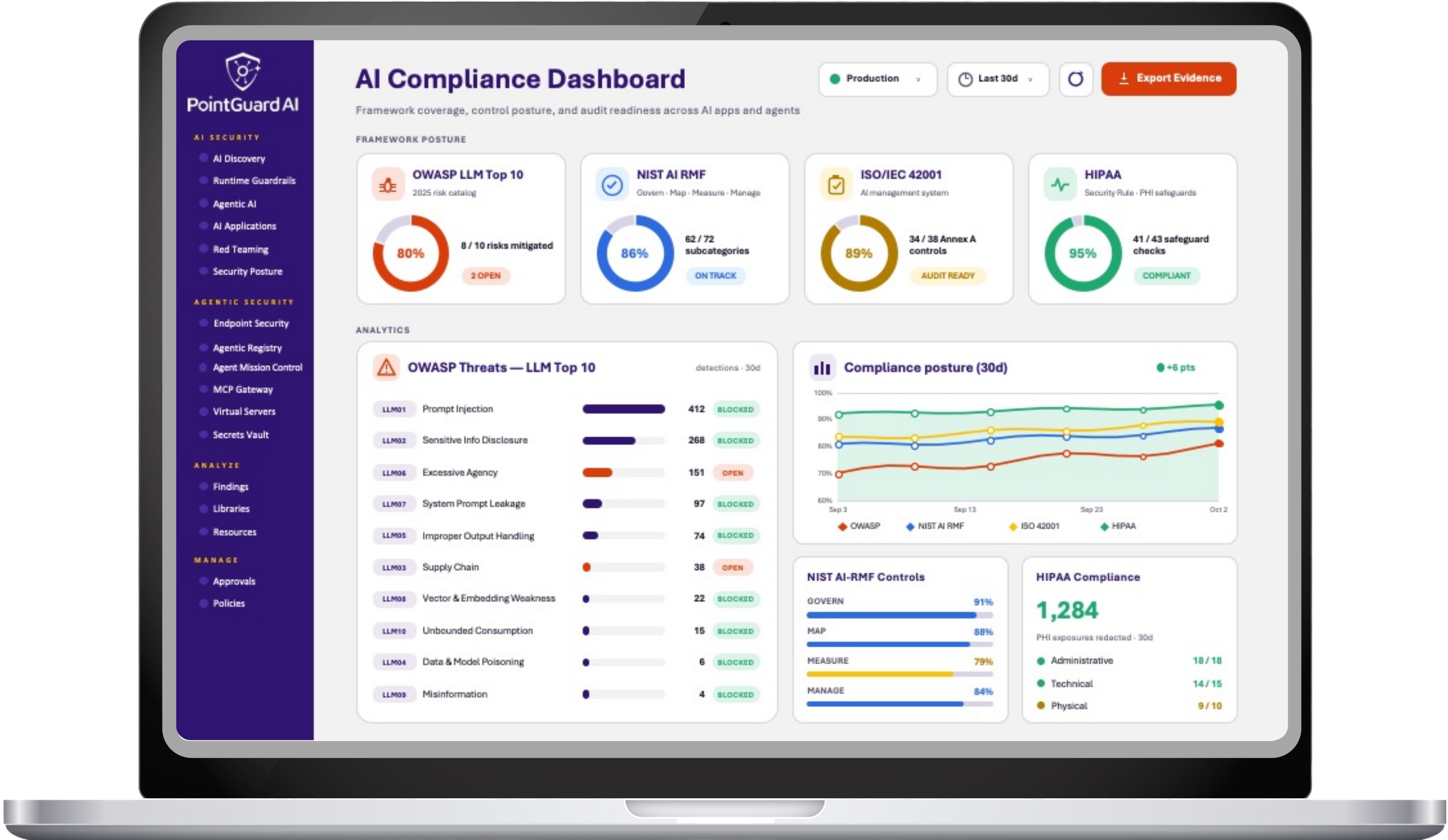
Bring findings from models, applications, agents, MCP infrastructure, data, and workforce usage into a shared governance view. Relate technical evidence to owners and affected systems, then track investigation, exceptions, and remediation. Consolidation reduces duplicate reporting and gives reviewers a clearer account of how each risk is being managed.
Unify evidence across AI security controls
Associate findings with assets and owners
Track exceptions through documented remediation steps
%20FLIPPED.avif)
regulation
Organize policies, findings, and evidence for programs such as the EU AI Act, alongside relevant privacy and sector requirements. Standards-based mappings help teams identify applicable controls and reporting gaps as obligations evolve. The platform supports governance preparation and ongoing oversight without implying automatic legal compliance or certification.
Organize evidence for EU AI Act
Align security controls with regulatory needs
Identify gaps as requirements continue evolving
workflows
Apply consistent review processes to newly discovered AI assets and policy violations. Route decisions to accountable teams, document approvals and exceptions, and track whether a control was enforced or a finding was resolved. Continuous evidence helps reduce the effort of recurring assessments and security reviews.
Route findings to the responsible teams
Document approvals, policy actions, and exceptions
Measure remediation progress across AI systems
.avif)
reporting
Report status by standard, affected asset, and control area while preserving the history of findings, decisions, and remediation. Auditors and internal stakeholders can follow the relationship between a risk and the actions taken. This makes governance more demonstrable as AI systems and agent workflows expand.
Report risk and control status clearly
Preserve attributable decisions and remediation history
Export mapped evidence for internal assessments
Clients Words
AppSOC brings it all together in one intuitive dashboard – helping me prioritize vulnerabilities and ensure compliance.
Customer Spotlight
Our expert team can assess your needs, show you a live demo, and recommend a solution that will save you time and money.

Find content, demos, case studies, guides, blogs, and more in our extensive library