Reduce agent credential risk with short-lived authentication, delegated access, continuous validation, and policy-controlled secrets for autonomous AI workflows.
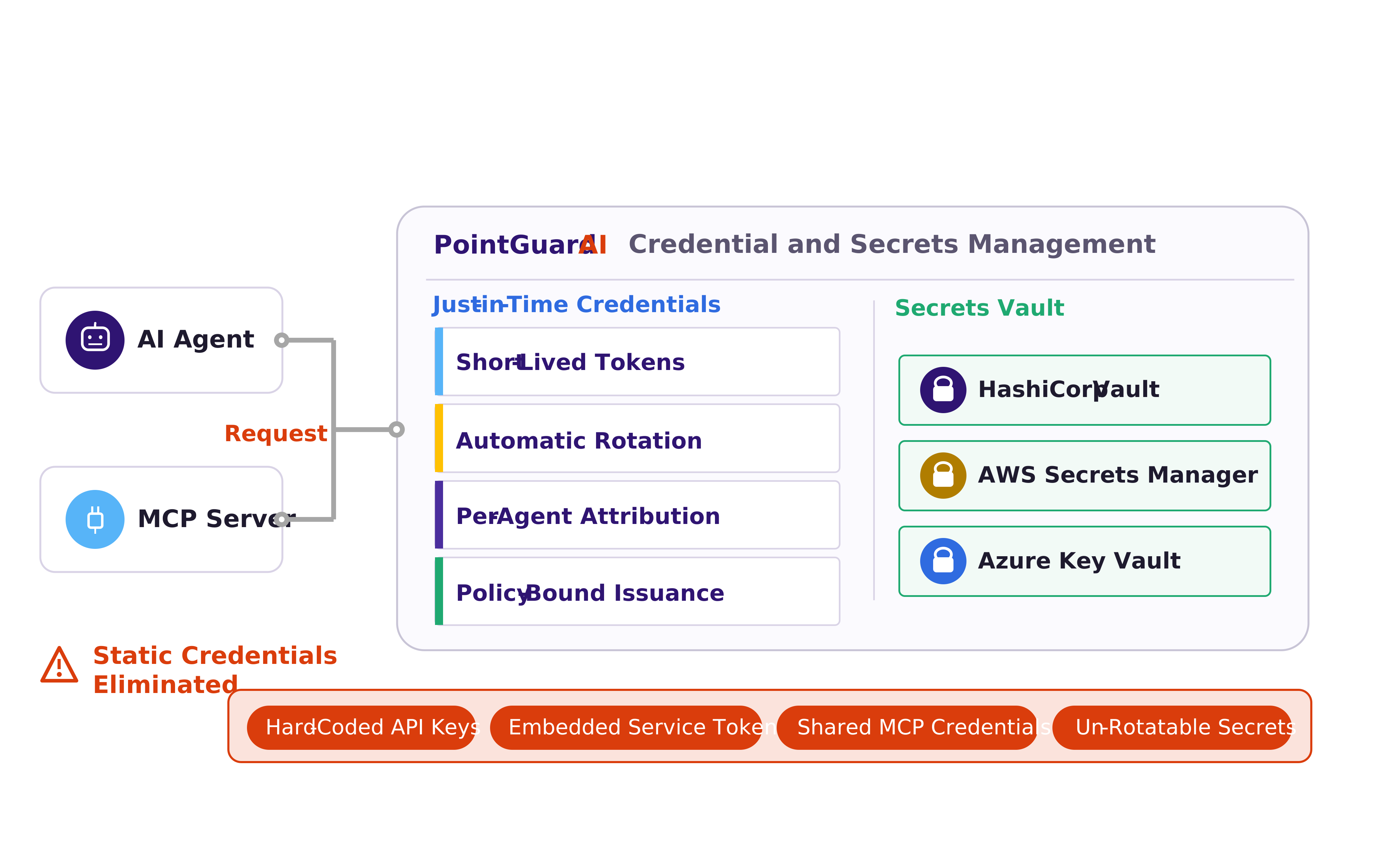
Move autonomous agents from static API keys and long-lived secrets to identity-based, scoped, time-bound credentials. Bind access to the agent, user, task, and requested action so authority expires when the justified work ends.
Agents need credentials to access tools, APIs, and systems, but persistent secrets create several risks:
PointGuard AI provides a comprehensive solution for replacing static agent credentials with governed, short-lived access:
1. Establish agent identity. Use Agent Mission Control to bind each agent to an owner, purpose, scope, and governance context.
2. Issue time-bound access. Use OAuth or on-behalf-of flows to replace broad secrets with scoped credentials that expire quickly.
3. Validate every use. Use MCP Security Gateway to check agent identity, delegated user context, permissions, and requested action.
4. Block stale access. Deny static, expired, or out-of-scope credentials and record enforcement decisions for audit and investigation.
Reducing standing credentials limits exposure while preserving the speed and autonomy agents need.
Applicable framework risks and controls include: