Professional Services & Consulting Solutions
Discover, govern, and protect every AI system touching privileged client data and billable work product.
.svg)
Discover, govern, and protect every AI system touching privileged client data and billable work product.
Law firms, accounting firms, and consultancies have rushed AI into legal research, contract drafting, e-discovery, audit workpapers, billing and time-entry automation, and client engagement chatbots. Each function routes privileged, regulated, or proprietary client data through prompts, model outputs, and third-party tools that confidentiality safeguards, ethics walls, and traditional file-based DLP were never designed to inspect or contain.
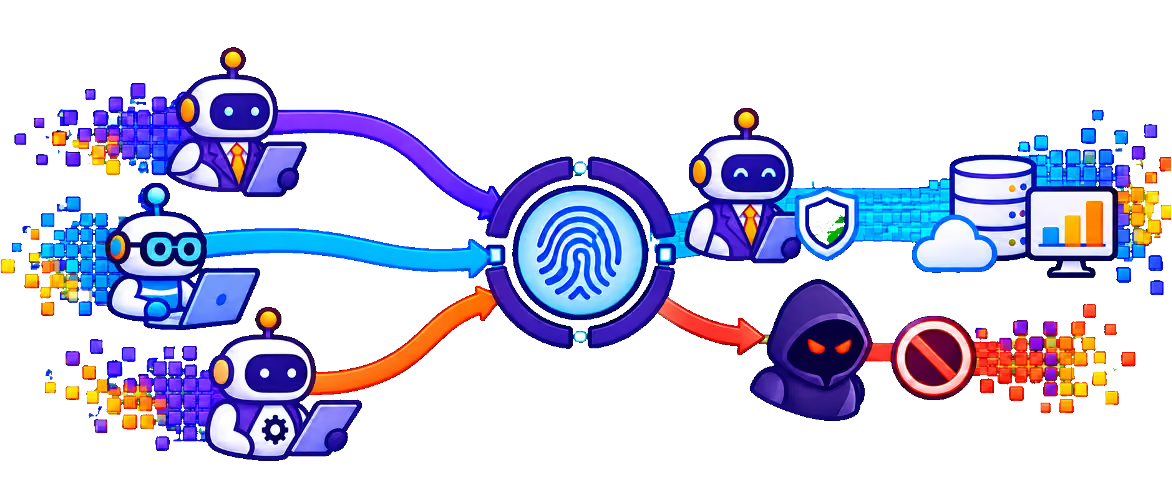
PointGuard AI discovers every shadow AI tool, agent, and MCP server in use, then issues each agent a verifiable cryptographic identity distinct from the humans it acts for. AI-native DLP inspects prompts, responses, and tool calls at sub-100ms latency, blocking privileged data before it leaves governed boundaries, while continuous evidence maps every control to OWASP, NIST AI RMF, and ISO/IEC 42001. With confidentiality and data security ranked the top barrier to AI adoption across the profession, PointGuard AI gives law firms, accounting firms, and consultancies the control to adopt AI safely.
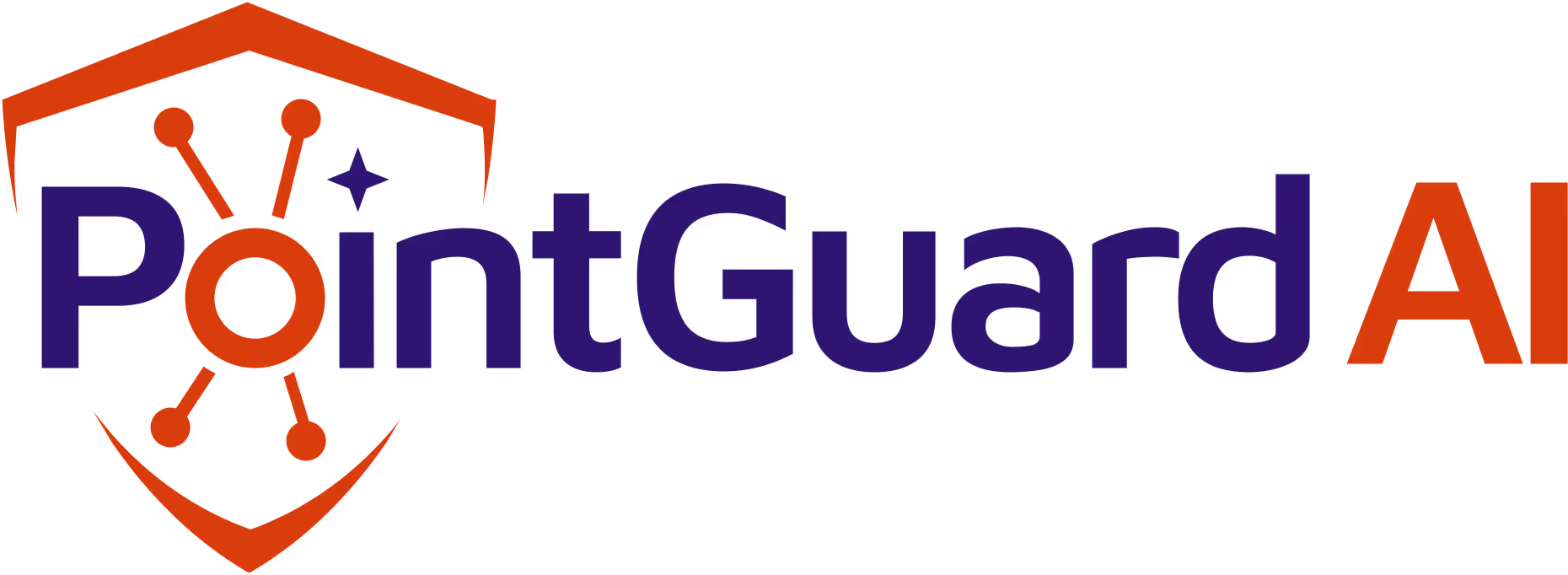
Contract-drafting copilots, engagement chatbots, and research assistants route privileged filings and client financials through prompts and outputs that file-and-email DLP tools were never built to scan, so protected work product exits unnoticed.
PointGuard's AI-native DLP inspects prompts, responses, and tool calls at sub-100ms latency, catching confidential data leaks.
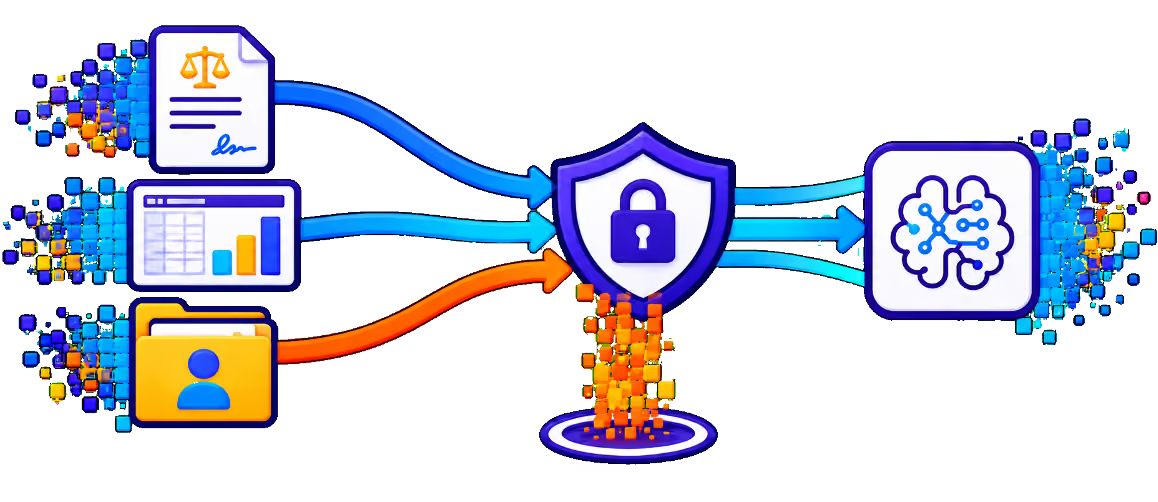
Associates, partners, and staff adopt free consumer AI apps to draft memos, summarize discovery, or check billing entries, uploading client documents into tools outside any firm-managed environment, invisible to IT and compliance.
PointGuard AI continuously inventories every AI tool, agent, and MCP server across clouds, repos, and endpoints.
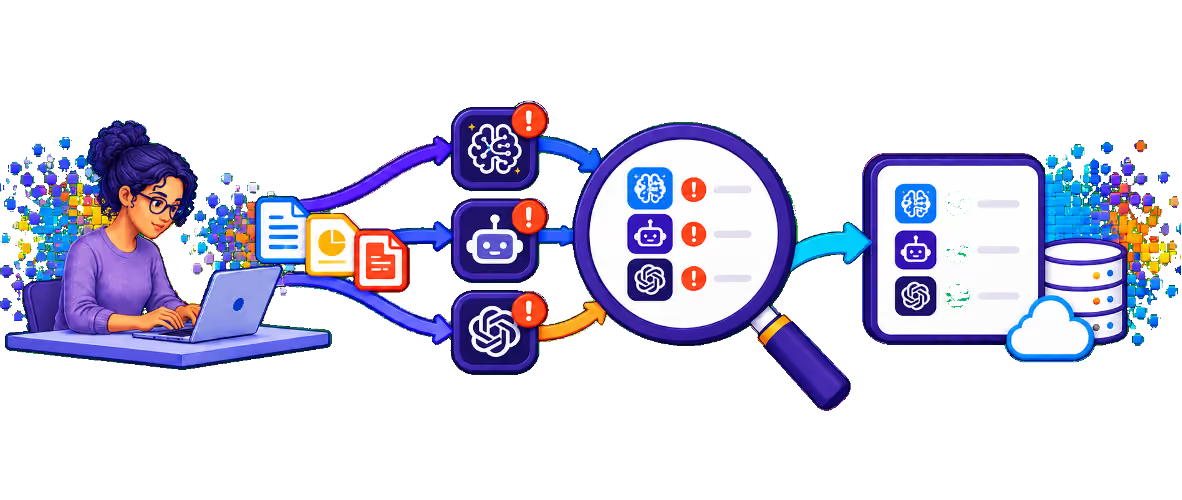
When staff paste case facts or engagement details into public AI chatbots, the platform's own terms permit storing and reusing that input, so the communication loses the confidentiality privilege depends on entirely.
With PointGuard, OAuth 2.0 issues each agent a short-lived, scoped token, keeping exchanges inside governed, attributable channels.
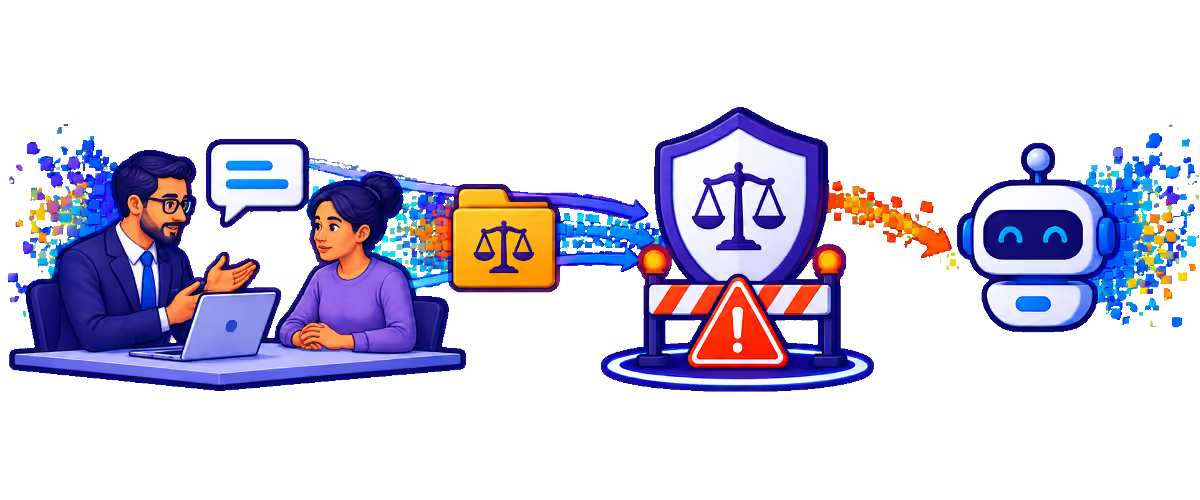
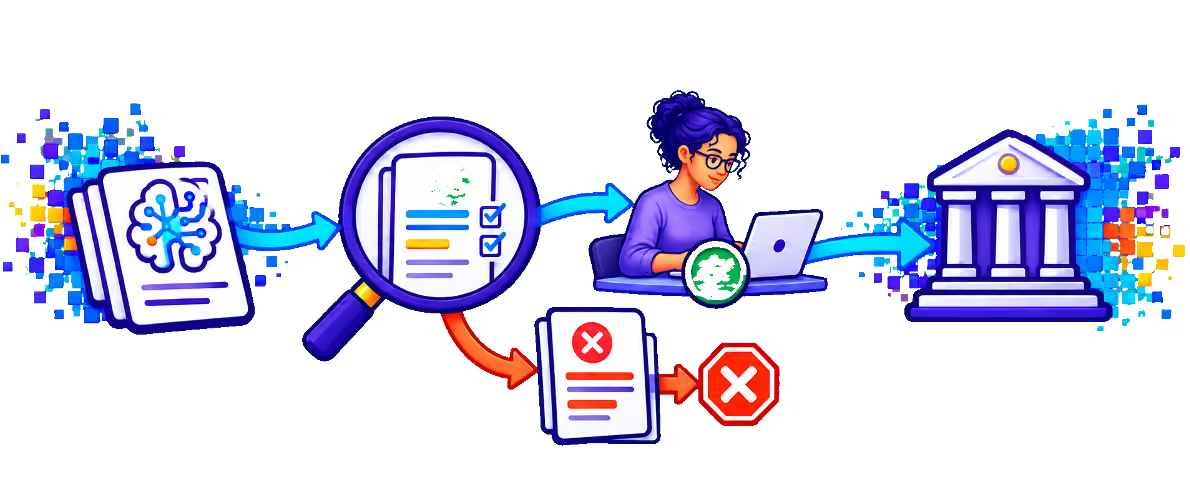
Legal research and contract-drafting copilots generate polished citations, clauses, and figures with no built-in checkpoint forcing review before they reach a court filing, client deliverable, or signed engagement letter.
Our customizable output guardrails apply context-aware policy to every AI response, escalating flagged content for human review.
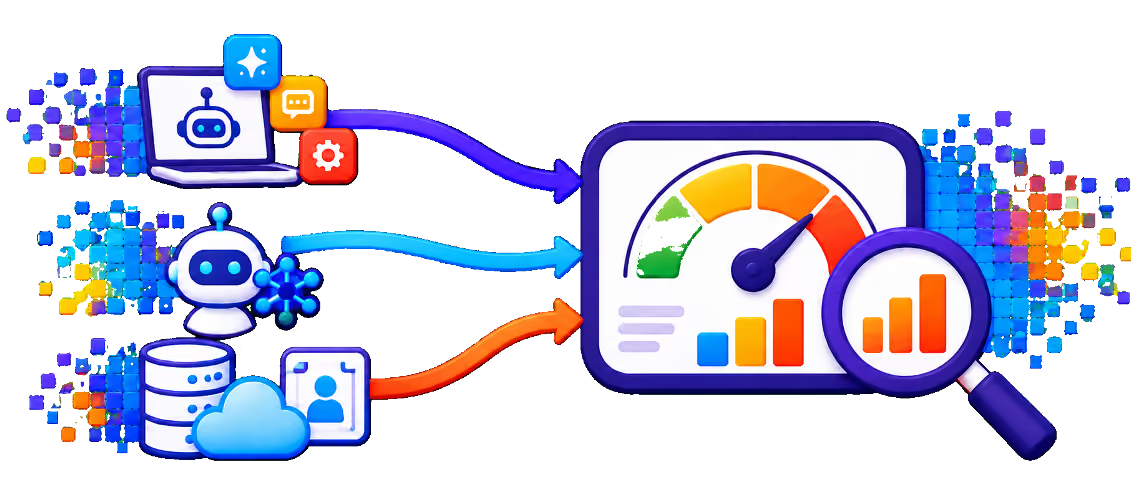
Partners and risk committees are asked how exposed the firm is to unmanaged AI across every practice group and office, yet no combined score exists linking discovery, posture, and live threat data.
PointGuard combines discovery, posture, and adversarial testing into one defensible exposure score for firm leadership.
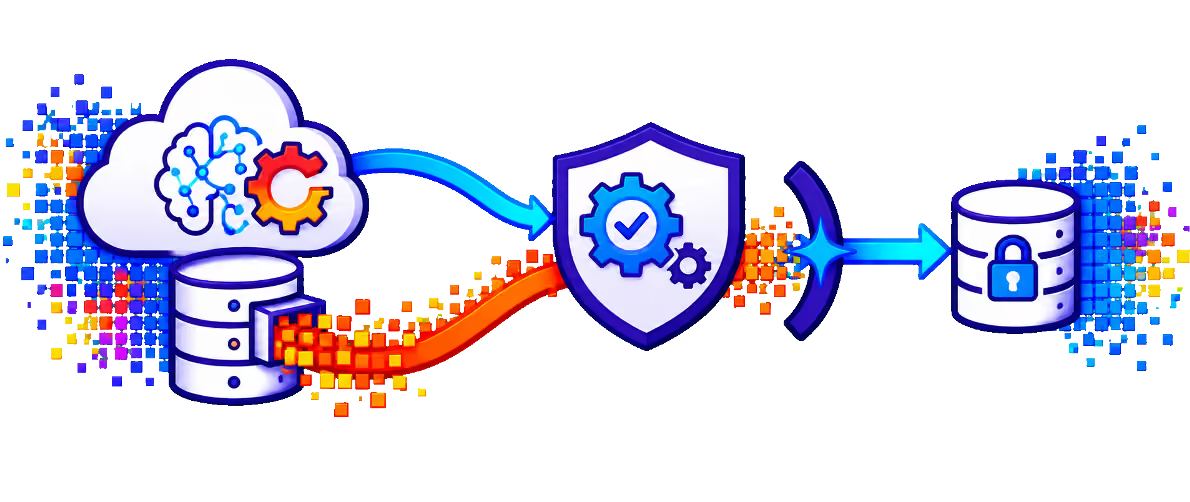
Audit and research teams connect AI platforms and MLOps tools with default settings, permissive access policies, and sprawling credentials that traditional posture tools were never designed to inspect or harden.
PointGuard's zero-trust configuration baselines harden every connected AI platform continuously, surfacing misconfigurations before exploitation.
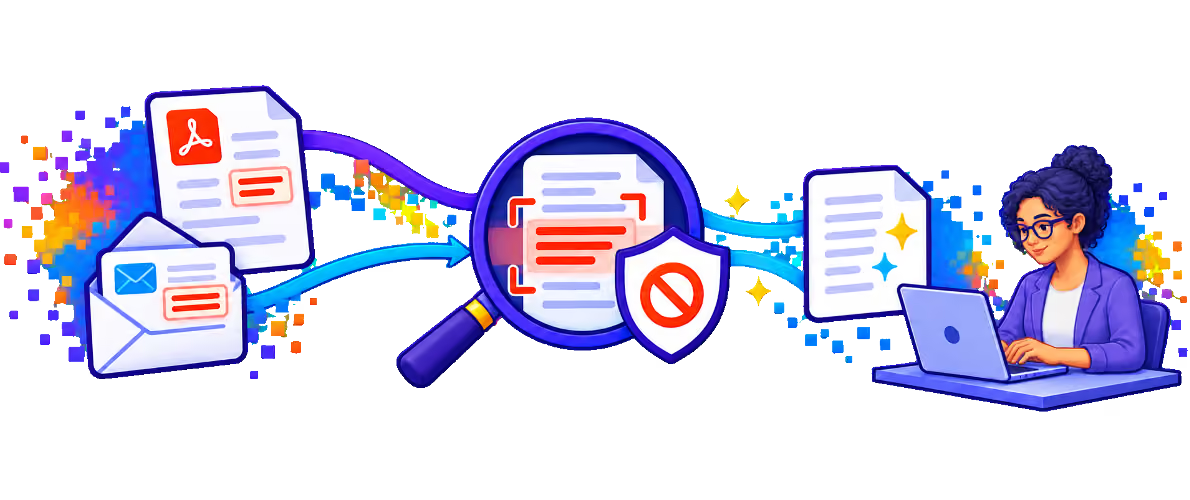
E-discovery agents and research assistants retrieve emails, contracts, and PDFs from client data rooms without treating that content as untrusted, so instructions hidden inside a document can redirect the agent's next action.
PointGuard's retrieved-content scanning treats every document and tool output as untrusted, blocking hidden injected instructions before execution.
Many firms still lack a formal generative AI policy, while others report one still in development, leaving individual practice groups to set their own rules for client data and model use.
With PointGuard, every finding, control, and audit record maps to OWASP, NIST AI RMF, and ISO 42001.

Consultancies now run dozens of agents across audit, tax, and advisory workstreams, often inheriting a consultant's own login, so no one can attribute a specific action to the agent that took it.
PointGuard issues cryptographic agent identity using DIDs and Ed25519 signatures, enabling instant revocation for every action.
Explore our Use Case Library to see dozens of details examples of customer challenges, solutions, and deployment recommendations.
Clients Words
AppSOC brings it all together in one intuitive dashboard – helping me prioritize vulnerabilities and ensure compliance.
Customer Spotlight
Market leaders from Gartner have included PointGuard AI in multiple reports on the emerging AI security space.

Our expert team can assess your needs, show you a live demo, and recommend a solution that will save you time and money.