Use Case
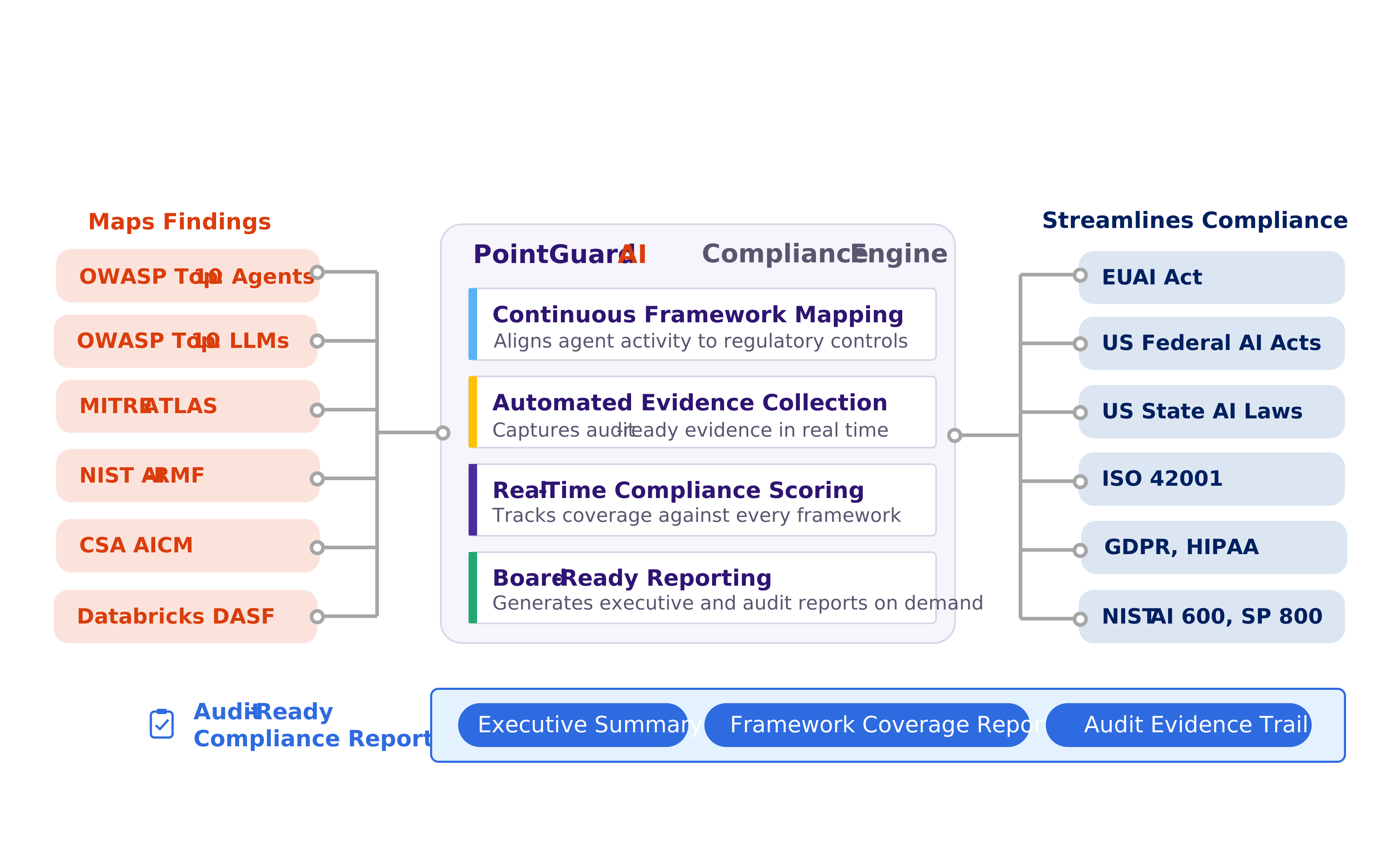
Map AI security and governance controls to leading frameworks and produce current, audit-ready evidence. Consolidate findings across models, agents, data, applications, MCP infrastructure, and runtime activity as standards, regulations, and enterprise requirements evolve.
Challenges
AI programs span many teams, technologies, and risk domains, while compliance expectations require demonstrable governance and operational control:
- Incomplete AI inventories make compliance scope difficult to establish
- Manual evidence collection cannot keep pace with AI change
- Teams lack proof that policies are enforced consistently
- Fragmented findings complicate mapping across frameworks and regulations
Solution
PointGuard AI provides a comprehensive solution that connects AI governance controls with continuous compliance evidence and reporting:
1. Inventory governed AI. Use AI Discovery & Inventory to identify agents, models, applications, MCP infrastructure, data, and connected resources within compliance scope.
2. Map controls and findings. Use AI Governance to consolidate findings and map them to OWASP, NIST AI RMF, MITRE ATLAS, EU AI Act, ISO 42001, and other applicable standards.
3. Collect operating evidence. Capture policy enforcement, agent actions, security findings, approvals, remediation, and attributable audit records as systems operate.
4. Report gaps and status. Use centralized reporting to demonstrate control posture, prioritize gaps, and support regulations including the EU AI Act, HIPAA, GDPR, and emerging legislation.
Continuous evidence turns AI compliance from periodic documentation into an operational governance process.
Risks Addressed
Applicable framework risks and controls include:
OWASP Top 10 for LLMs
- LLM01:2026 Prompt Injection
- LLM02:2026 Sensitive Information Disclosure
- LLM03:2026 Excessive Agency
- LLM04:2026 Supply Chain
- LLM05:2026 Data and Model Poisoning
- LLM06:2026 Unbounded Consumption
- LLM07:2026 Misinformation
- LLM08:2026 Hidden Context Exposure
- LLM09:2026 Vector and Embedding Weaknesses
- LLM10:2026 Improper Output Handling
OWASP Top 10 for Agentic Applications
- ASI01: Agent Goal Hijack
- ASI02: Tool Misuse and Exploitation
- ASI03: Identity and Privilege Abuse
- ASI04: Agentic Supply Chain Vulnerabilities
- ASI05: Unexpected Code Execution (RCE)
- ASI06: Memory & Context Poisoning
- ASI07: Insecure Inter-Agent Communication
- ASI08: Cascading Failures
- ASI09: Human-Agent Trust Exploitation
- ASI10: Rogue Agents
NIST AI Risk Management Framework
- GOVERN 1.4: Transparent risk policies, procedures, and controls are established
- GOVERN 2.1: Roles, responsibilities, and communication are documented and clear
- GOVERN 6.1: Policies and procedures address third-party AI risks
- MAP 1.1: Intended use, context, users, and lifecycle risks are documented
- MAP 5.1: Likelihood and magnitude of identified impacts are documented
- MEASURE 1.1: Risk measurement approaches and metrics are selected and implemented
- MEASURE 2.7: AI system security and resilience are evaluated and documented
- MANAGE 1.1: Determine whether deployment should proceed
- MANAGE 4.1: Post-deployment monitoring and change management are implemented