Prevent proprietary code and secrets from leaking through AI coding tools. Protect prompts, files, responses, and agent workflows.
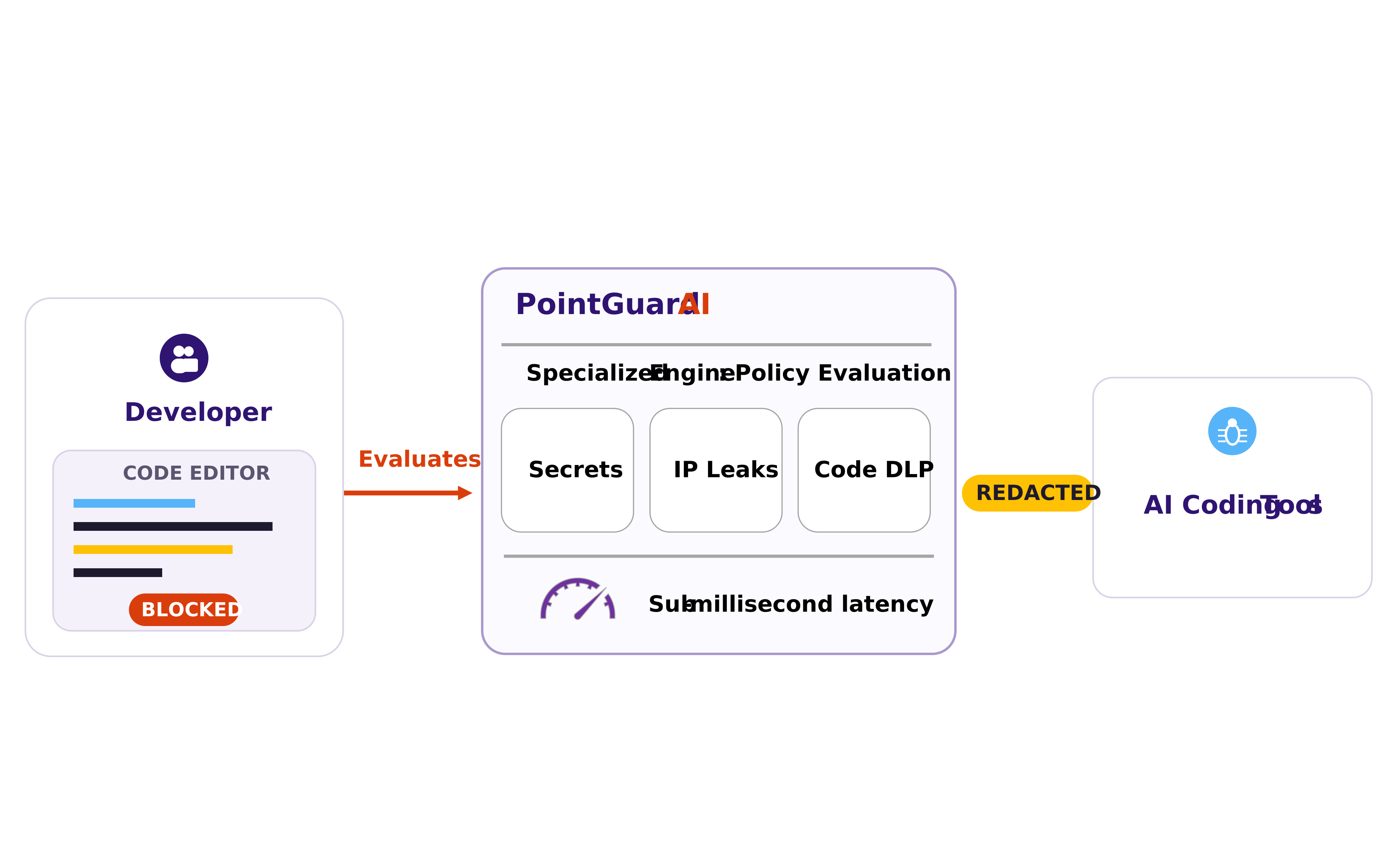
AI coding assistants accelerate development, but they also create a direct channel between proprietary code and external or internal models. PointGuard AI helps security teams inspect those interactions and enforce data-protection policy without blocking developer productivity.
The AI environment creates several recurring security and governance challenges:
PointGuard AI provides a comprehensive solution for protecting source code across coding prompts, files, responses, and agent interactions:
1. Inspect coding interactions. Use AI Intelligent Guardrails and MCP Security Gateway to monitor prompts and responses from AI coding tools to identify proprietary code, secrets, and restricted technical information.
2. Scan retrieved content. Inspect source files and other retrieved content before they are passed into models or agent workflows.
3. Enforce code protection policies. Block, mask, or redact protected code and secrets when an interaction violates enterprise data policies.
4. Protect connected coding agents. Extend runtime DLP to MCP and agent tool calls so code cannot be exfiltrated through downstream workflows.
This allows development teams to benefit from AI coding tools while keeping proprietary code and technical secrets inside approved boundaries.
Applicable framework risks and controls include: