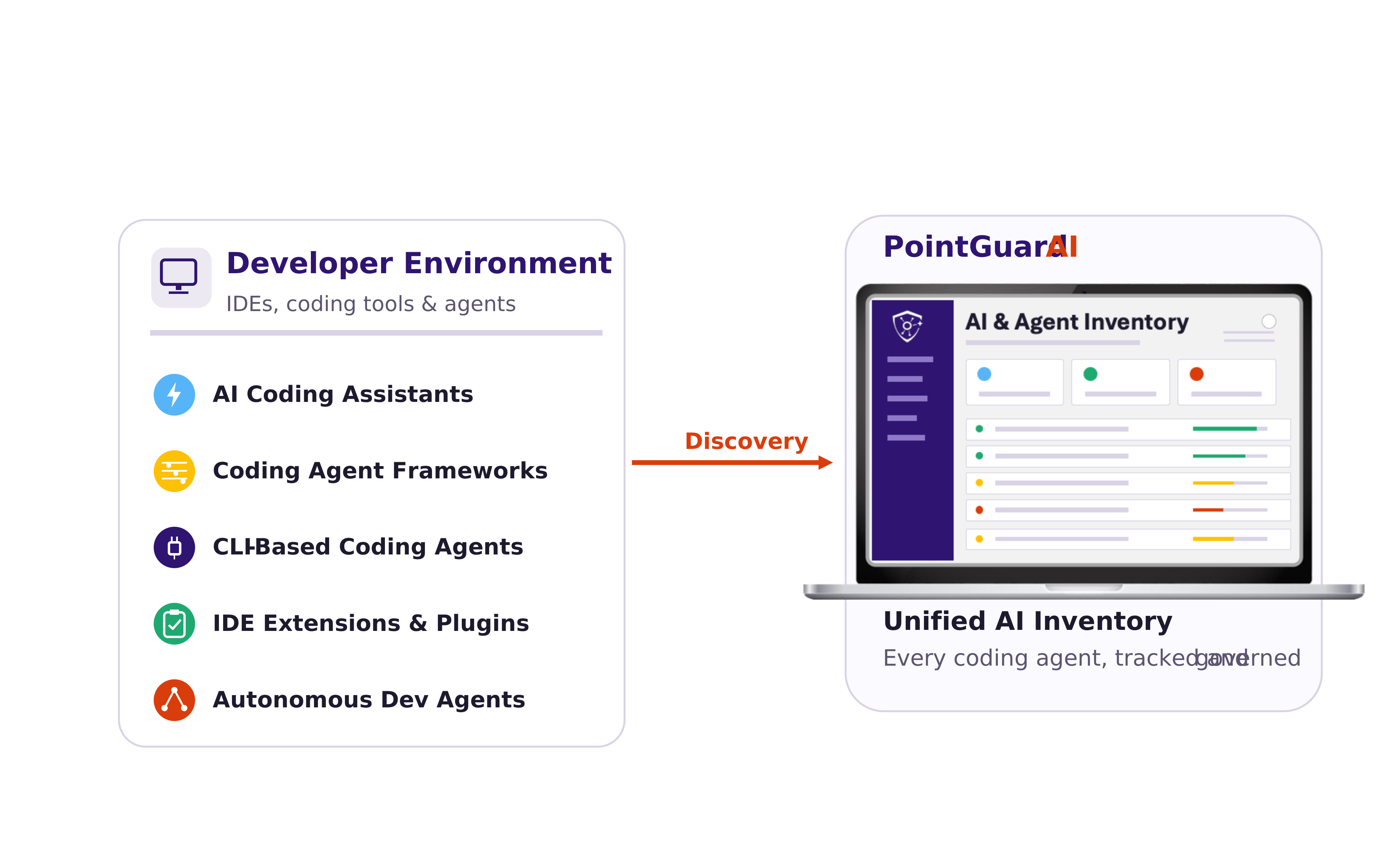
Continuously discover coding agents across developer environments and bring them under governance.
Identify open-source models across enterprise projects and evaluate whether they are appropriate for use before they become embedded in applications. Combine provenance and licensing context with model-specific risk intelligence, adversarial testing, deployment posture, and governance workflows.
Open-source models accelerate development, but public repositories contain components with widely varying provenance, maintenance, security, licensing, and behavioral characteristics. Enterprise teams commonly face these challenges:
PointGuard AI provides a comprehensive solution that combines model discovery, risk intelligence, security testing, posture context, and approval workflows:
1. Discover open-source models. Use AI Discovery & Inventory to identify models across AI platforms and projects, then track provenance, licensing, lineage, ownership, and connected applications.
2. Apply model risk intelligence. Compare discoveries with the PointGuard AI Model Risk Knowledge Base, which has assessed more than 300,000 open-source models across security, operational controls, provenance, and adoption maturity.
3. Test model security. Use AI Red Teaming to evaluate models for prompt injection, information disclosure, embedded malware, unsafe behavior, toxicity, bias, and other adversarial weaknesses.
4. Assess deployment posture. Use AI Security Posture Management to identify misconfigurations, unsafe permissions, exposure, and supply-chain relationships that can increase deployment risk.
5. Govern approval and remediation. Route models through AI Governance approval, exception, restriction, and remediation workflows based on technical findings and business context.
Together, these controls support evidence-based model adoption without sacrificing development speed, visibility, or accountability.
Applicable framework risks and controls include: