Give every autonomous agent verifiable identity, accountable ownership, and defined operational scope.
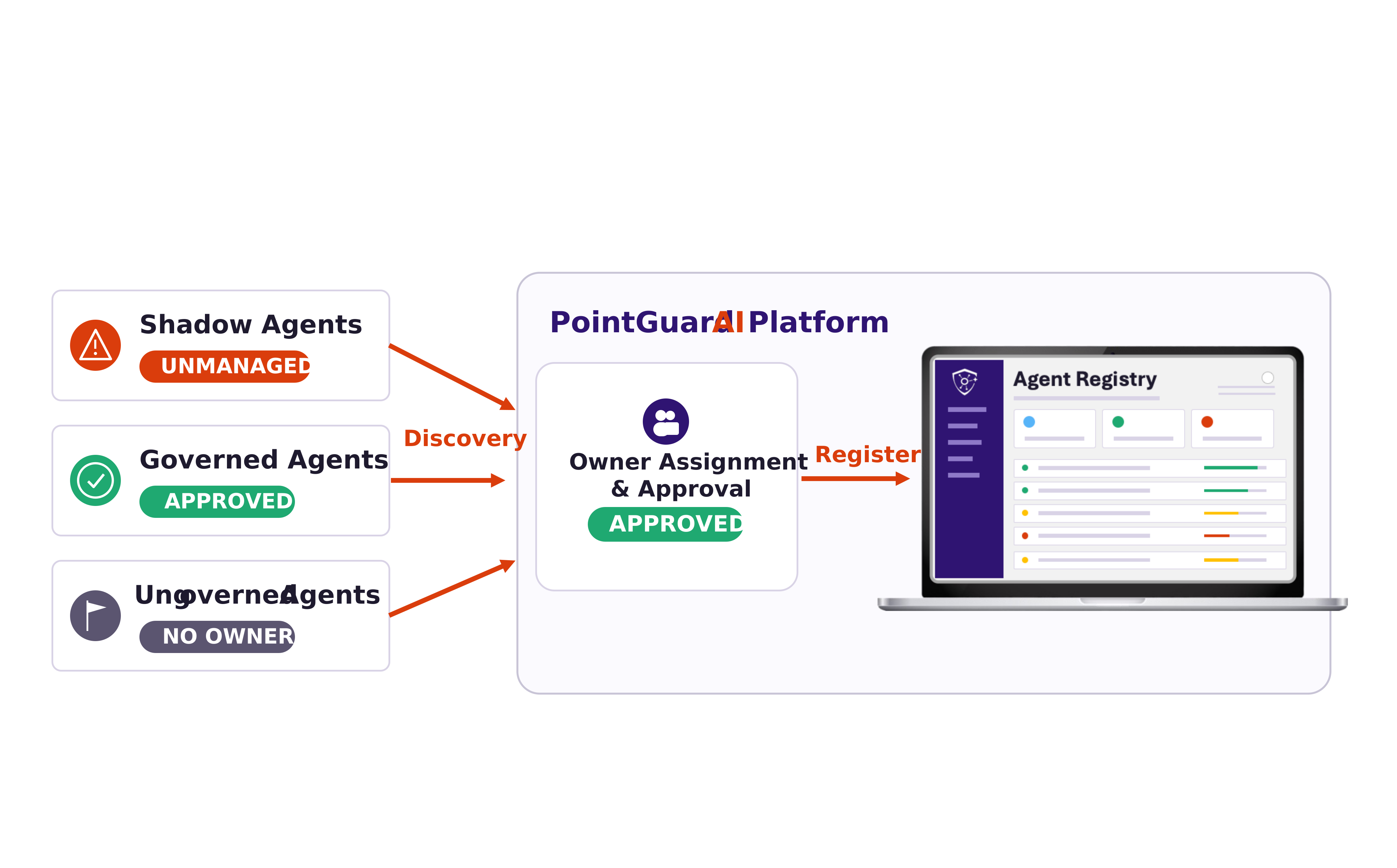
Make every autonomous agent a known and accountable enterprise identity. Bind each agent to an owner, purpose, mission, permissions, environment, authorized resources, and lifecycle status so actions can be governed and attributed.
Agents can execute workflows and use enterprise resources without the identity boundaries applied to people. This creates several governance gaps:
PointGuard AI provides a comprehensive solution for establishing agent identity, ownership, and accountable runtime governance:
1. Discover and register agents. Use AI Discovery & Inventory and Agent Mission Control to identify agents and bring Shadow Agents into a centralized registry.
2. Issue verifiable identity. Assign each agent a distinct cryptographic identity instead of relying on shared human credentials.
3. Bind ownership and scope. Associate the agent with an accountable owner, purpose, mission, permissions, environment, and lifecycle status.
4. Enforce identity-aware controls. Use MCP Security Gateway and Agent Mission Control to validate actions, govern tool access, and preserve attributable records.
Every agent becomes a known, governable identity that supports least privilege, monitoring, investigation, and compliance.
Applicable framework risks and controls include: