Govern AI agents acting for users with scoped, time-bound on-behalf-of authorization, tool-level policy enforcement, and end-to-end auditability.
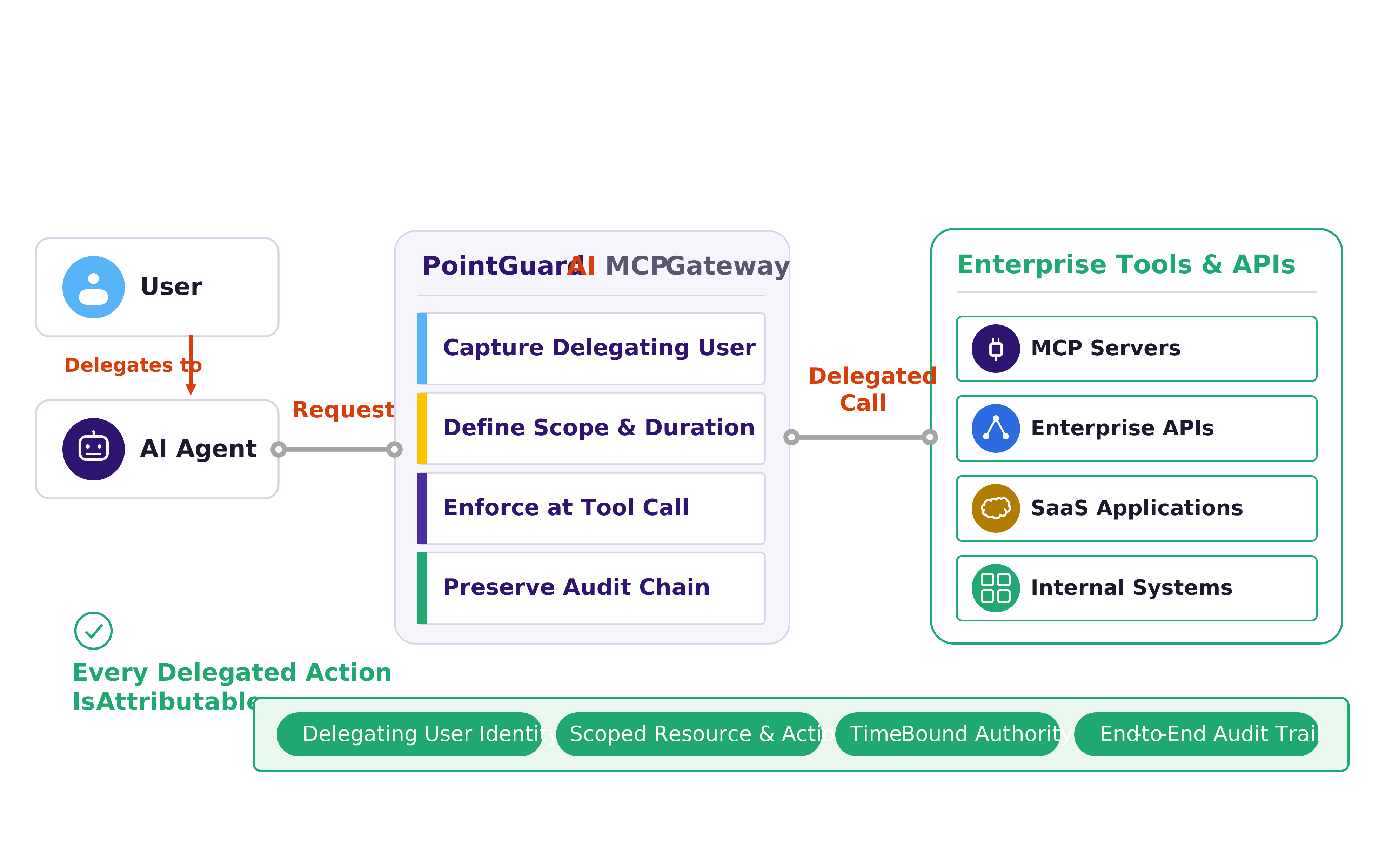
Preserve the originating user’s identity, permissions, and intent when an agent acts on that person’s behalf. Use OAuth-based delegation and expiring tokens to keep downstream tool access attributable, narrowly scoped, and time-bound.
Traditional integrations often lose user context or pass excessive privileges through agent workflows. This creates several control gaps:
PointGuard AI provides a comprehensive solution for on-behalf-of authorization across agent workflows:
1. Capture the delegating user. Authenticate the originating user and associate that identity with the agent request.
2. Define scope and duration. Use OAuth-based delegation and expiring tokens limited by resource, action, agent, and time.
3. Enforce every downstream call. Use MCP Security Gateway to apply delegated context when the agent reaches tools, APIs, and enterprise systems.
4. Preserve the audit chain. Record the complete user-to-agent-to-tool path so each action remains attributable and reviewable.
Agents can scale user-directed automation without exceeding human authority or losing accountability.
Applicable framework risks and controls include: