Enforce least-privilege authorization for every agent request to MCP tools and resources.
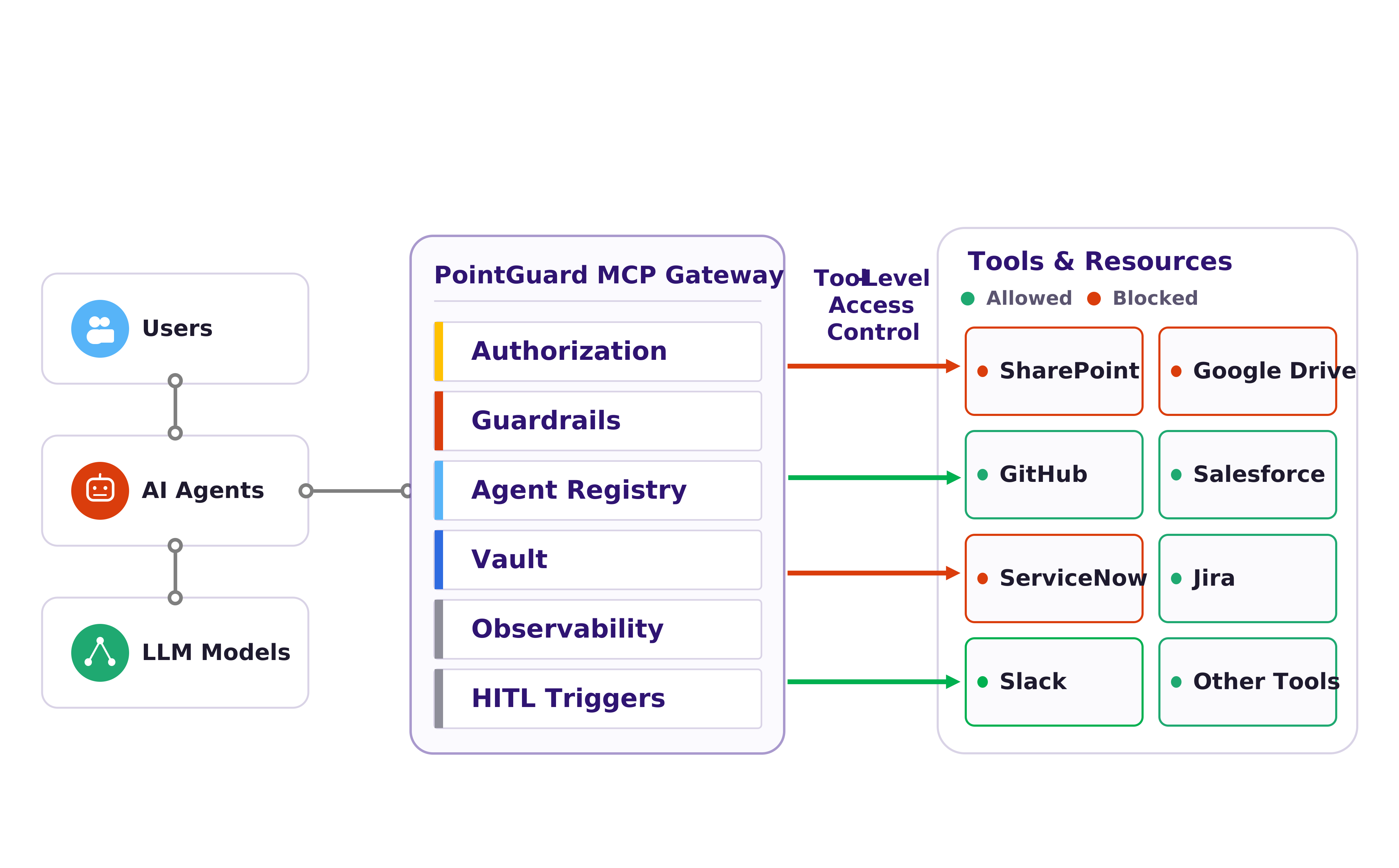
Place identity-aware authorization directly in the MCP path so every tool call is evaluated before execution. Apply granular policy by agent, user, tool, operation, purpose, resource, data sensitivity, environment, and risk.
MCP connects agents directly to powerful enterprise tools and data. Broad or static access creates several control gaps:
PointGuard AI provides a comprehensive solution for least-privilege MCP tool authorization:
1. Establish identity context. Identify the agent and relevant user or workload before it requests access to enterprise tools.
2. Define granular permissions. Set policies for specific tools, operations, resources, and workflow conditions rather than broad server access.
3. Evaluate every tool call. Use MCP Security Gateway to assess identity, intent, purpose, context, data sensitivity, and action risk before execution.
4. Escalate high-risk actions. Block disallowed requests or require human approval and step-up authentication when policy thresholds are exceeded.
MCP becomes a governed access layer instead of an implicit trust channel for autonomous activity.
Applicable framework risks and controls include: