
Check every triage agent action against policy and trust score before it reprioritizes cases, messages patients, or escalates care.
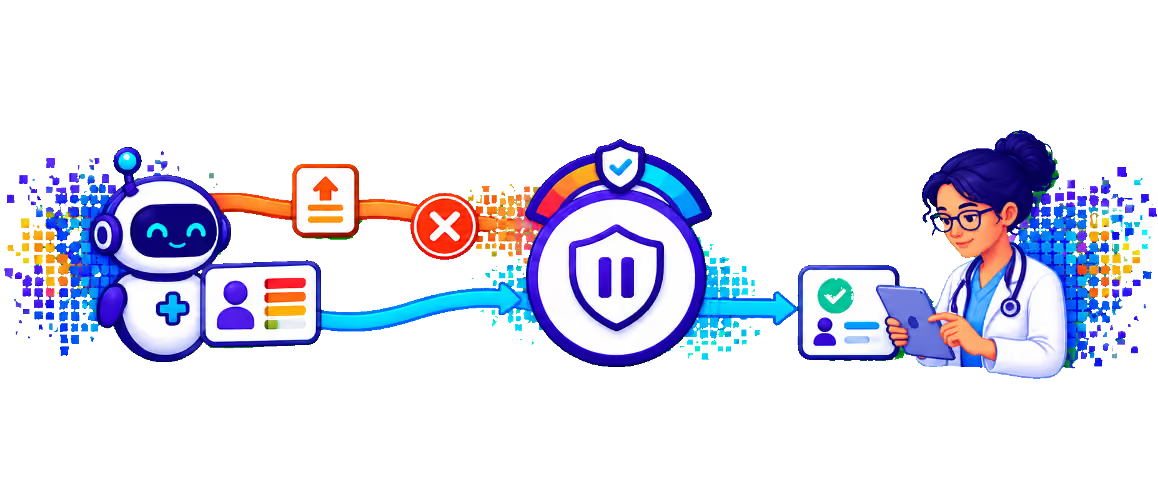
Triage agents now reprioritize cases, message patients, and escalate care autonomously. When an agent acts on flawed judgment or manipulated input, the consequence reaches a patient before any clinician reviews it. PointGuard AI validates each agent action before execution, holding high-impact actions for human approval and containing agents whose behavior drifts.
Autonomous triage actions can affect patient care before anyone reviews them.
Agent Mission Control and Guardian Agent validate actions before execution and contain agents that drift.
1. Define each agent's mission. Register owners, permitted actions, patient populations, and data scopes for each triage agent.
2. Validate before execution. Check every proposed action against policy and the agent's trust score at sub-millisecond latency, before it reaches the EHR or patient.
3. Require approval for high-impact actions. Route priority changes, clinical escalations, and patient messages that meet defined risk criteria to a clinician for approval.
4. Monitor and contain. Track behavior continuously. Restrict tools, pause agents, or use kill switches when trust drops, and keep full telemetry for review.