
Inspect clinical decision support inputs and outputs to block injected or fabricated content before clinicians rely on it.
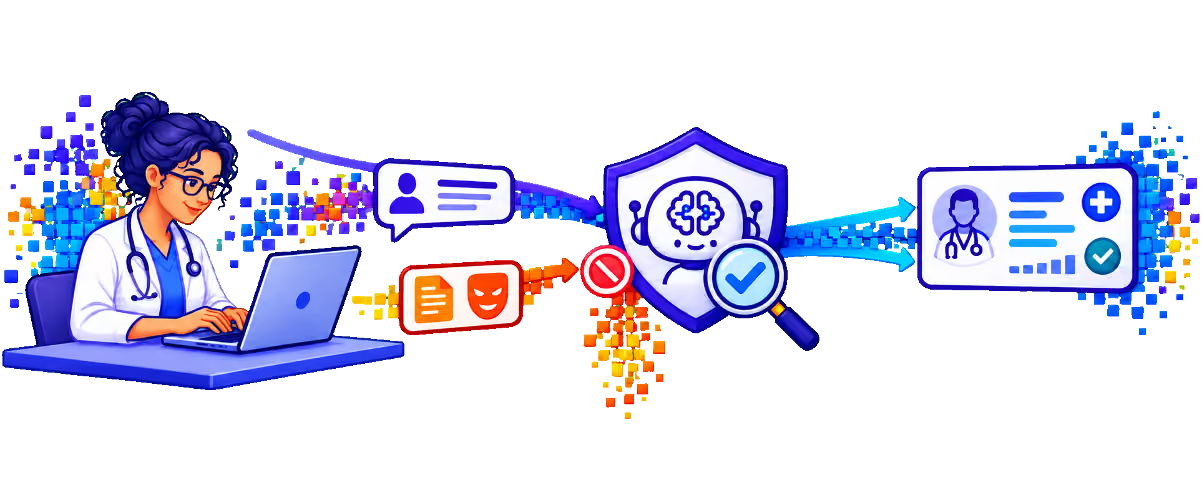
Clinical decision support tools retrieve notes, references, and patient records to answer questions. When a source contains injected instructions or an error, models can elaborate confidently on conditions or findings that do not exist, with no signal that anything is wrong. PointGuard AI inspects inputs and outputs in real time, helping organizations block unsafe responses before they reach clinicians.
Fluent, confident answers make fabricated clinical content hard to spot.
Runtime Guardrails and AI Red Teaming test decision support behavior and enforce clinical content policies at runtime.
1. Inspect inputs. Scan prompts, retrieved documents, and tool outputs for injection attempts using fine-tuned detection models at sub-100 ms latency.
2. Enforce response policies. Check answers against organization rules for dosing, diagnosis statements, and restricted topics. Block or flag responses that violate policy.
3. Test before release. Probe decision support tools with clinical, adversarial, and edge-case scenarios before approving model or knowledge-base changes.
4. Monitor and retest. Track detections over time and retest after updates to catch new failure patterns.
These controls reduce exposure to unsafe content; clinical accuracy still depends on validated sources and clinician judgment.