
Detect and block customer PII, credentials, and payment data in service chatbot prompts and responses before it leaves.
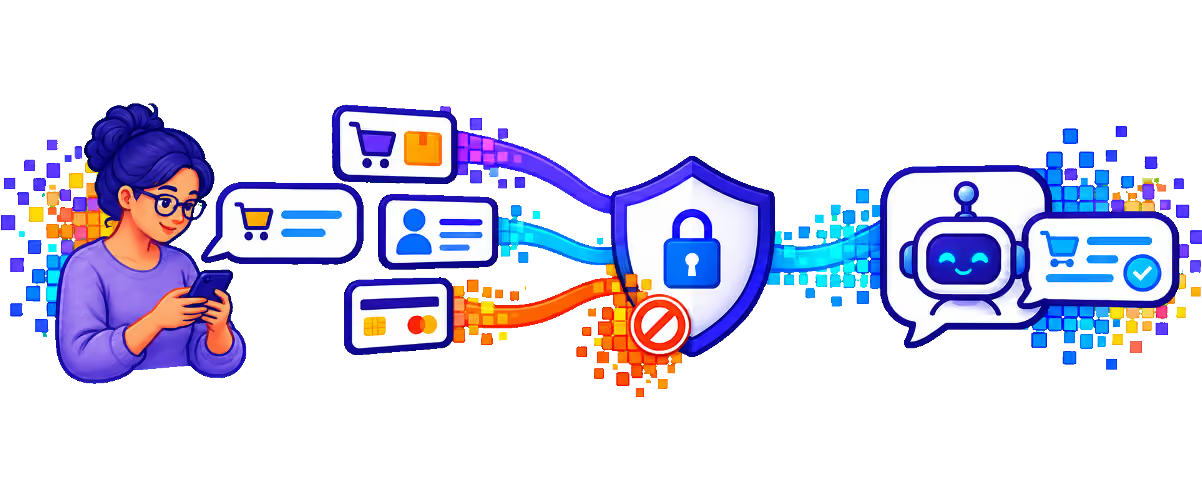
Service chatbots handle order questions, returns, and account changes, creating a conversational channel where customer credentials, addresses, and payment data can leak. Attackers also probe chatbots to extract other customers' information. PointGuard AI applies AI-native data protection to every chatbot prompt and response, keeping customer data within approved boundaries and supporting PCI-DSS obligations.
Conversational channels expose customer data in new ways.
AI Data Protection and Runtime Guardrails protect customer data across service chatbots.
1. Define protected data. Use built-in detectors for PII, credentials, and payment card data, and add retailer-specific identifiers.
2. Inspect every interaction. Scan prompts and responses at sub-100 ms latency without slowing service.
3. Redact or block. Mask card numbers and credentials before they reach models or logs, and block responses that expose other customers' data.
4. Record evidence. Log detections for security, privacy, and PCI-DSS reporting.