
Detect privileged filings, client financials, and confidential work product in prompts, responses, and tool calls before it leaves the firm.
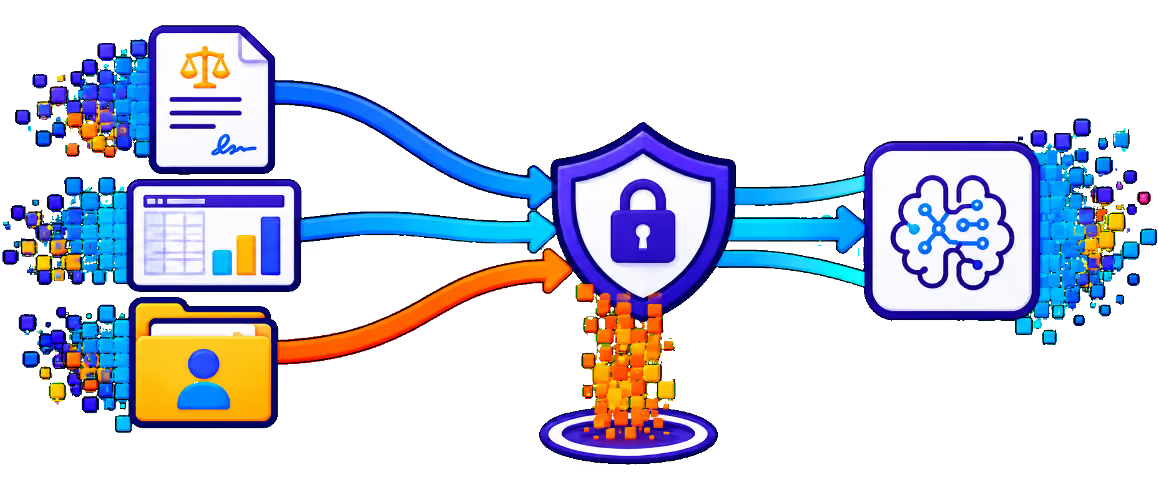
Drafting copilots and research assistants now handle privileged filings, deal documents, and client financials. File-based DLP cannot inspect prompts or tool calls, so confidential client data can reach unapproved models or the wrong matter team without detection. PointGuard AI applies AI-native data protection at every AI interaction, keeping privileged work product inside governed boundaries.
Client confidentiality depends on controls that do not inspect AI traffic.
AI Data Protection and Runtime Guardrails enforce confidentiality policies across firm AI tools.
1. Define protected data. Use built-in detectors for PII and financial data, and add custom types for client names, matter numbers, and deal code names.
2. Inspect every interaction. Scan prompts, responses, and tool calls at sub-100 ms latency.
3. Enforce matter boundaries. Block client data headed to unapproved tools or to users outside the matter team.
4. Record evidence. Log detections for risk, ethics, and information governance teams.