

Test credit AI for harmful patterns, enforce approved boundaries, and preserve evidence for lending governance reviews.
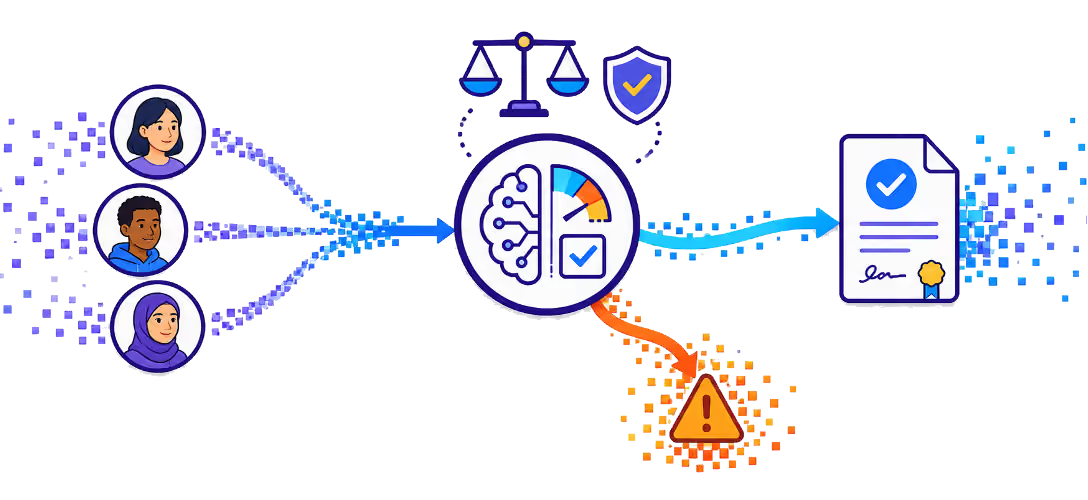
AI used in credit, pricing, and servicing can produce inconsistent or harmful outcomes as models and inputs change. Financial institutions need evidence that these systems have been tested and that sensitive actions remain governed. PointGuard AI supports bias-oriented adversarial testing, policy enforcement, and auditability as part of a broader fair-lending and model risk management program.
Discriminatory patterns and policy deviations can emerge across model behavior, agent workflows, and human reliance on AI recommendations.
AI Red Teaming, Agent Mission Control, and governance reporting help teams evaluate credit AI behavior and enforce operational boundaries.
1. Define credit testing scenarios. Create probes reflecting lending tasks, borrower interactions, and prohibited behavior. Include bias and harmful-output tests alongside security scenarios, with evaluation criteria set by the institution's risk teams.
2. Compare and retest behavior. Assess models and applications using repeatable scenarios. Review prompts, responses, and failure rationales, then schedule testing to identify regressions following changes to models, prompts, or workflows.
3. Enforce approved boundaries. Apply policies to agent actions and route sensitive operations for human approval. Restrict tools and privileges so an AI recommendation cannot independently expand into an unauthorized credit decision.
4. Document findings and remediation. Track failures, policy decisions, and corrective actions for governance review. Use the evidence to inform model selection, deployment decisions, and ongoing oversight by lending and risk specialists.
Security and adversarial testing complement statistical fairness analysis, legal review, and lending controls; they do not establish that a credit model meets fair-lending requirements.