

Map AI findings and controls to HIPAA, HITECH, NIST AI RMF, and the EU AI Act for audit-ready evidence.
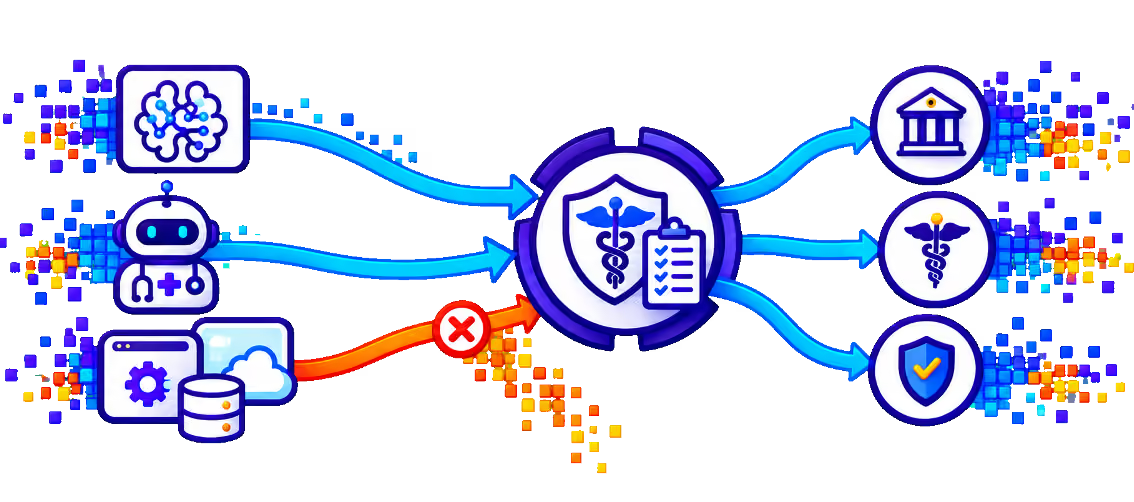
HIPAA, HITECH, and FDA requirements rarely name specific technical controls for AI, so compliance teams hand-map evidence for every model, vendor, and agent. That work is slow, inconsistent, and outdated by the next audit. PointGuard AI links discovery, testing, and enforcement results to the frameworks healthcare organizations report against, so evidence stays current and consistent.
Compliance teams translate AI activity into regulatory evidence by hand.
AI Governance, AI Discovery & Inventory, and AI Security Posture Mgt. centralize findings and map them to health and AI frameworks.
1. Inventory AI systems. Discover models, applications, agents, and vendors, with owners, intended use, and the patient data each touches.
2. Collect findings. Combine posture findings, adversarial test results, and runtime detections into a single risk view for each system.
3. Map to frameworks. Link findings and controls to HIPAA, HITECH, NIST AI RMF, ISO/IEC 42001, and the EU AI Act. Organize evidence by system for audits and reviews.
4. Report continuously. Use dashboards and exports to show open risks and remediation progress to compliance committees, auditors, and regulators.
PointGuard AI supports compliance programs; it does not replace legal review or establish compliance with any regulation.