

Scan emails, documents, and retrieved content for hidden instructions before they reach the model and trigger zero-click data theft.
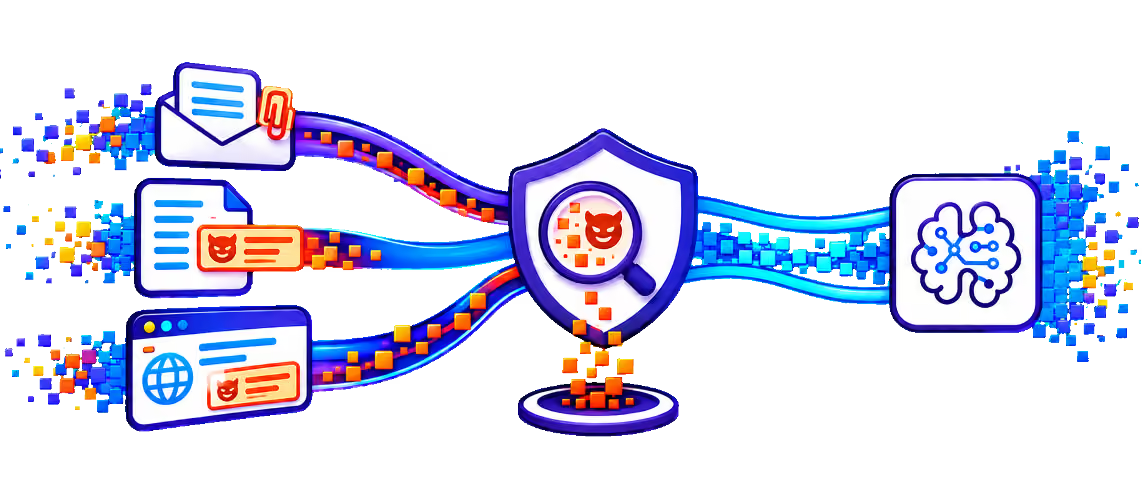
SaaS copilots read customer emails, documents, tickets, and web content to answer questions and take actions. Attackers hide instructions in that content, which the copilot can treat as trusted commands, exfiltrating account data through links, images, or tool calls without any user click. PointGuard AI inspects retrieved content and tool outputs before they reach the model and blocks exfiltration paths in responses.
Every piece of content a copilot reads is a potential attack.
Runtime Guardrails and AI Red Teaming block indirect injection at runtime and test copilots before release.
1. Inspect retrieved content. Scan documents, emails, and tool outputs for injection patterns using fine-tuned detection models at sub-100 ms latency.
2. Block exfiltration paths. Strip or block untrusted links, images, and markup in responses that could carry data out.
3. Constrain actions. Require approval for sensitive tool calls initiated after reading untrusted content.
4. Test continuously. Probe copilots with indirect and zero-click injection scenarios before release and after each update.