

Inspect retrieved documents and tool responses for hidden instructions before they redirect banking assistants or agents.
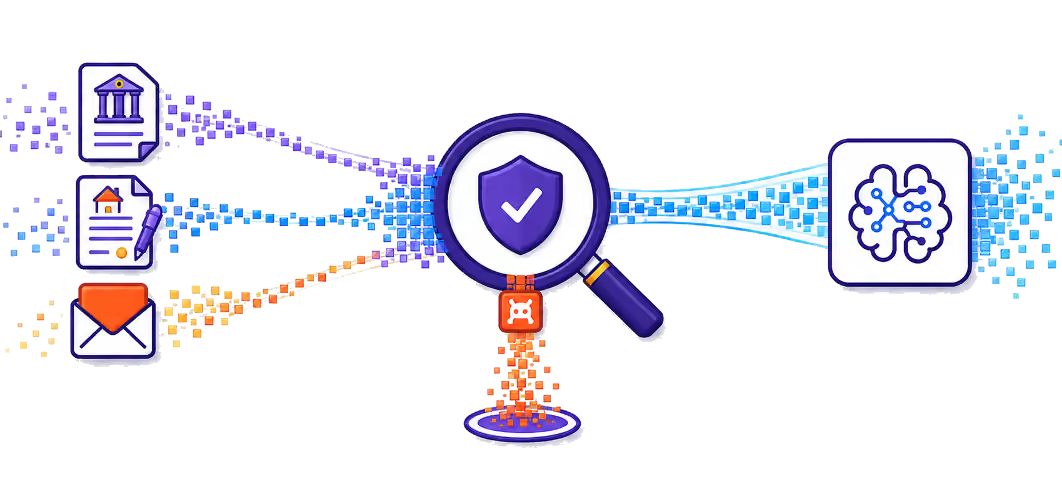
Bank statements, loan applications, customer emails, and retrieved records supply context for AI assistants. They can also carry hidden instructions that ask an agent to disclose information, skip a check, or redirect a payment. PointGuard AI inspects untrusted content and governs downstream tool actions, helping banks keep document content from becoming unauthorized operational instructions.
AI assistants can mistake attacker-controlled document content for instructions that override the bank's intended workflow.
Runtime Guardrails and MCP Security Gateway inspect incoming content while Agent Mission Control applies independent limits to the actions an agent may take.
1. Inspect untrusted content. Evaluate user prompts, retrieved files, document content, and governed tool outputs for injection attempts before model processing. Distinguish direct instructions from attacks embedded in external material.
2. Block malicious interactions. Apply configured threat policies to stop detected manipulation and record the enforcement result. Use application context and data sensitivity to determine how suspicious content should be handled.
3. Validate downstream actions. Check proposed tool operations against the agent's identity, mission, delegated authority, and policy. A document's instruction to change a payee or bypass a check does not expand the agent's permissions.
4. Test evolving attack paths. Run adversarial probes against document-driven workflows and retest after changes. Review detections and action records to identify gaps across retrieval, model processing, and tool execution.