
Give forecasting and replenishment agents verifiable identities, and validate every change before it commits.
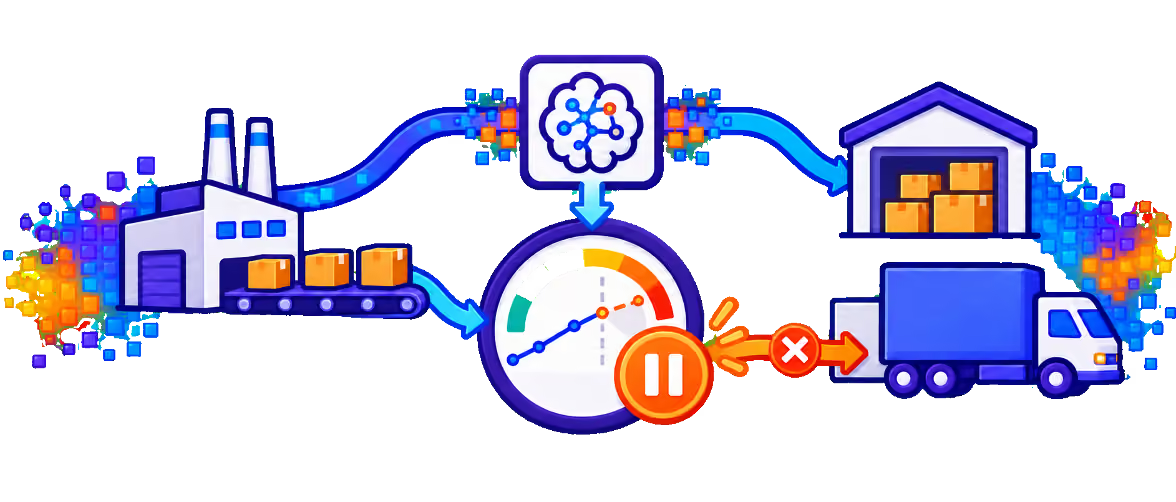
Supply chain agents adjust forecasts, trigger replenishment, and reprice promotions, often under shared credentials and without sign-off. A manipulated or drifting agent can overorder inventory or misprice promotions across many retailers before anyone notices. PointGuard AI gives each agent its own identity and validates every action against policy before execution.
Autonomous supply chain decisions carry large financial impact.
Agent Identity & Access Security and Agent Mission Control secure agent identity and validate actions.
1. Register every agent. Assign each supply chain agent a DID-based identity backed by Ed25519 keys, with an owner and mission.
2. Scope access. Issue short-lived, scoped tokens for planning, ordering, and pricing systems.
3. Validate before execution. Check each change against policy, thresholds, and trust score at sub-millisecond latency, and hold large changes for approval.
4. Contain and attribute. Use circuit breakers for runaway changes and tie every action to its agent.