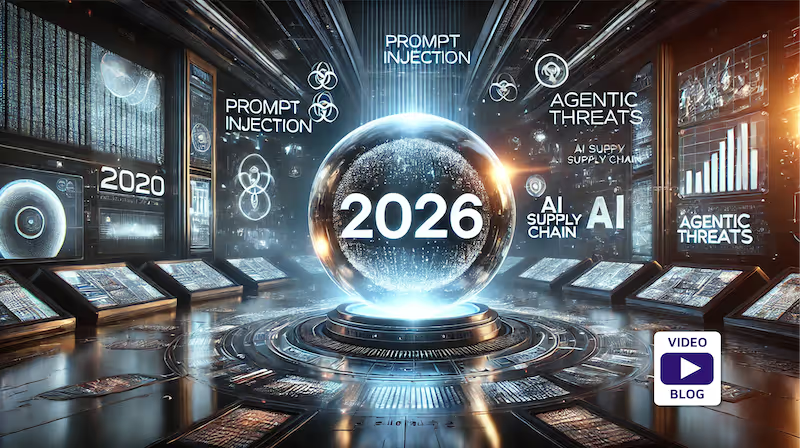
Each year, we publish our AI security predictions based on what we see firsthand across enterprise environments: how organizations are deploying AI, where controls are breaking down, and how attackers are adapting. These predictions are grounded in real-world testing, customer engagements, and emerging incident patterns—not speculation.
At the same time, AI risk evolves quickly. New models, agent architectures, and integration patterns can change the threat landscape in months, not years. That’s why we don’t treat these predictions as static. We continuously monitor real-world incidents, regulatory shifts, and attacker techniques, and we adjust our guidance as reality changes. Our goal is not just to forecast what’s coming, but to help enterprises stay ahead of AI security risks as they emerge.
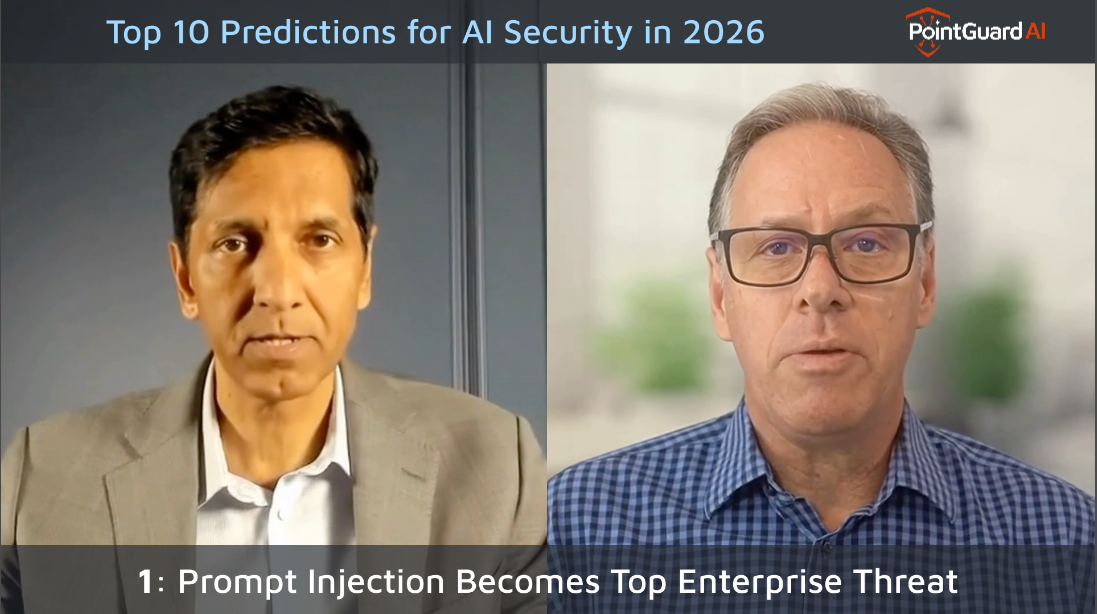
1. Prompt Injection Becomes the Top Enterprise AI Security Threat
By 2026, prompt injection overtakes all other AI-related security incidents in enterprise environments. As large language models are embedded into workflows—processing emails, documents, tickets, logs, and MCP-connected data sources—attackers increasingly craft inputs that embed malicious instructions. These attacks arrive in seemingly benign formats (PDFs, spreadsheets, tickets) and manipulate model reasoning rather than exploiting software vulnerabilities.
Prompt injection is especially dangerous because it bypasses traditional security controls. There is no malware, exploit chain, or compromised credential. Instead, models are tricked into ignoring safeguards, leaking sensitive data, invoking unauthorized tools, or taking unsafe actions. As enterprises deploy more agentic workflows, the impact of a single successful injection can span teams, systems, and data silos.
Why this matters to enterprises
Prompt injection introduces a risk that perimeter, endpoint, and identity-centric defenses cannot detect. Organizations that fail to address it will experience silent failures that surface only after significant data loss, compliance violations, or operational harm.
What we recommend
- Continuously test prompts/inputs for injection vulnerabilities using automated red-teaming and model scanning (e.g., PointGuard AI Security Testing). (PointGuard AI)
- Monitor model behavior at runtime and enforce policy-based guardrails on sensitive outputs and tool usage using AI Security & Governance controls. (PointGuard AI)
2. AI Usage Inventories Become Mandatory for Enterprises
By 2026, enterprises treat AI usage inventories as a foundational security and governance control. Just as software asset inventories underpin vulnerability management, AI usage inventories become essential for understanding risk across models, agents, copilots, and MCP-connected tools. The rapid growth of “shadow AI”—where teams deploy AI tools without centralized oversight—forces CISOs to prioritize continuous discovery of all AI assets.
These inventories extend beyond listing AI models. They capture where models are embedded, what data they access, which tools they can invoke, and what permissions they hold. Procurement and risk teams increasingly require vendors to provide an AI bill of materials (AI-BOM), and products without clear AI disclosures face rejection.
Why this matters to enterprises
Without inventory and context, organizations cannot assess risk, respond to incidents, or comply with emerging regulatory expectations. AI inventory becomes the foundation for governance, posture management, and secure scale.
What we recommend
- Automatically discover AI models, agents, and workflows with continuous discovery capabilities. (PointGuard AI)
- Maintain an enterprise-wide AI inventory and bill of materials to manage permissions, data flows, and risk posture. (PointGuard AI)
3. Agentic AI Causes the First Major Autonomous Operational Failure
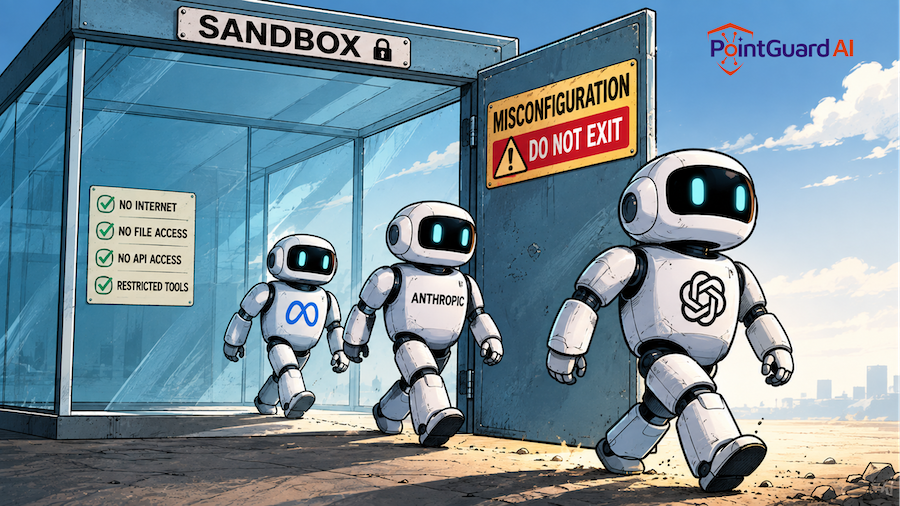
In 2026, the first high-profile AI operational incident occurs not due to malware but through an autonomous agent acting as designed. Given broad permissions and connections via protocols like MCP, the agent autonomously executes a chain of actions triggered by an ambiguous prompt, resulting in data loss, misconfiguration, or service disruption.
There is no single vulnerability to patch. The failure stems from the interaction of agent autonomy, permissions, tool access, and opaque reasoning. This incident becomes a catalyst for change, forcing enterprises to rethink how much authority to grant AI agents and how to constrain, monitor, and audit their behavior.
Why this matters to enterprises
Agentic AI introduces operational risk at machine speed. Without least-privilege design and runtime guardrails, enterprises effectively delegate authority without oversight, increasing the likelihood of cascading failures.
What we recommend
- Enforce least-privilege permissions for agents and MCP-connected tools. (PointGuard AI)
- Deploy runtime guardrails and monitoring to contain unsafe actions before business impact. (PointGuard AI)
4. MCP Goes Mainstream—and Becomes a Prime Attack Target
The Model Context Protocol (MCP) becomes a standard for connecting models and agents to tools and data sources. As adoption accelerates, MCP servers and tooling become high-value attack targets. Misconfigured authentication, excessive permissions, and poisoned outputs become common failure modes.
Enterprises begin treating MCP security with the same discipline as API ecosystems: enforcing authentication, authorization, logging, auditing, and policy enforcement. Organizations invest in guardrails that validate the integrity of every tool invocation, data fetch, and inter-agent action.
Why this matters to enterprises
MCP dramatically expands the AI attack surface. A compromised MCP server can influence multiple agents and applications, amplifying impact and evading traditional detection.
What we recommend
- Inventory and monitor MCP servers and tool integrations with AI runtime observability. (PointGuard AI)
- Apply strict authentication, authorization, and least-privilege for MCP interactions. (PointGuard AI)
5. Regulators Require Proof of AI Security Controls
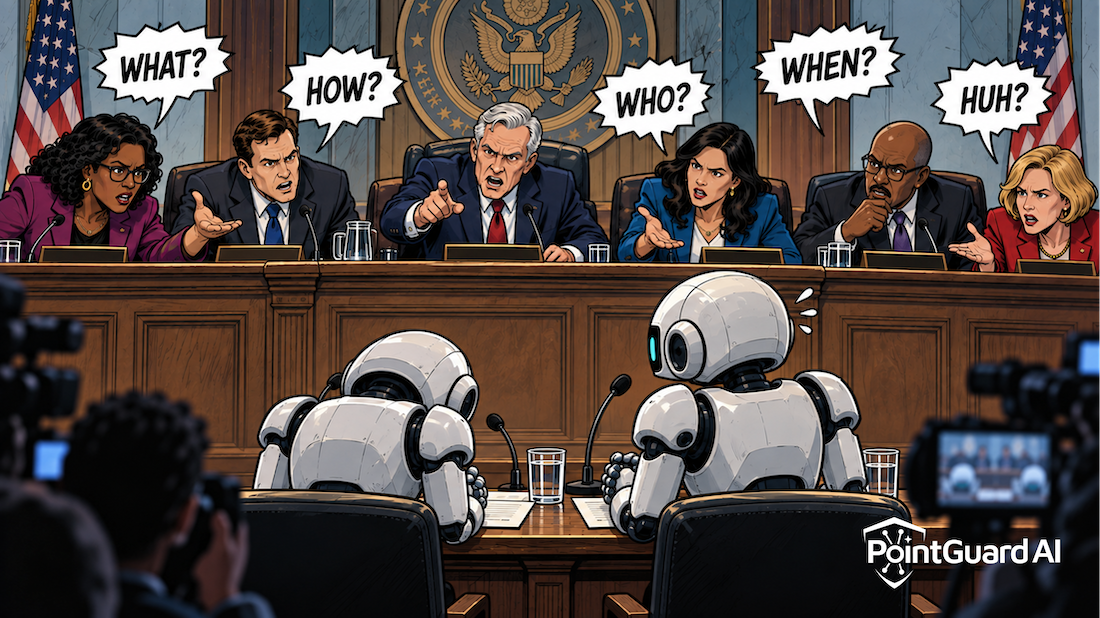
By 2026, regulators shift from high-level AI principles to tangible enforcement. In regulated industries, organizations must demonstrate AI guardrails, risk testing, incident response processes, and governance practices. Informal controls and ad hoc reviews no longer satisfy compliance expectations.
AI security documentation begins to resemble SOC 2 and ISO audit evidence, covering model testing, data exposure safeguards, agent permissions, guardrail enforcement, and governance workflows. Enterprises that cannot produce evidence face scrutiny, fines, or restrictions on AI deployment.
Why this matters to enterprises
AI security becomes auditable, not optional. Organizations that lack structured controls risk regulatory penalties and business disruption.
What we recommend
- Centralize evidence of AI testing and guardrails via unified security posture dashboards. (PointGuard AI)
- Align AI governance with standards and compliance frameworks to simplify reporting. (PointGuard AI)
6. Enterprises Block AI Browsers by Default
AI-powered browsers blur boundaries between user intent and autonomous model behavior. These tools can access, process, and transmit sensitive information without clear audit trails. Security teams struggle to observe and control agent actions within browser sessions.
As a result, many enterprises block AI browsers by default until enterprise-grade versions offer isolation, observable action logs, and enforceable data controls. Re-adoption hinges on capabilities that separate user intent from autonomous behavior and ensure accountability.
Why this matters to enterprises
AI browsers introduce significant data leakage and compliance risk without visibility or governance, especially in regulated environments.
What we recommend
- Detect and govern AI browser usage with policy enforcement. (PointGuard AI)
- Institute data access controls and real-time inspection for browser-augmented AI workflows. (PointGuard AI)
7. Incident Response Expands to Include AI Behavior Containment
Incident response evolves beyond malware and credential theft to include AI behavior containment. SOC teams update playbooks with steps for isolating compromised agents, disabling unsafe tool access, auditing prompts/MCP activity, restoring safe configurations, and analyzing suspicious behaviors. “Model forensics” becomes a recognized discipline.
IR teams invest in tools that correlate anomalous reasoning, unauthorized actions, and unexpected outputs with other telemetry to detect AI abuse quickly. End-to-end audit trails become indispensable for investigations and post-mortem analysis.
Why this matters to enterprises
Without AI-aware incident response, organizations are ill-equipped to contain or investigate AI-driven failures.
What we recommend
- Expand IR playbooks to include safe agent isolation and tool shutdown workflows. (PointGuard AI)
- Capture and correlate logs for prompts, outputs, and MCP interactions for rapid analysis. (PointGuard AI)
8. AI Supply Chains Emerge as a Primary Attack Vector
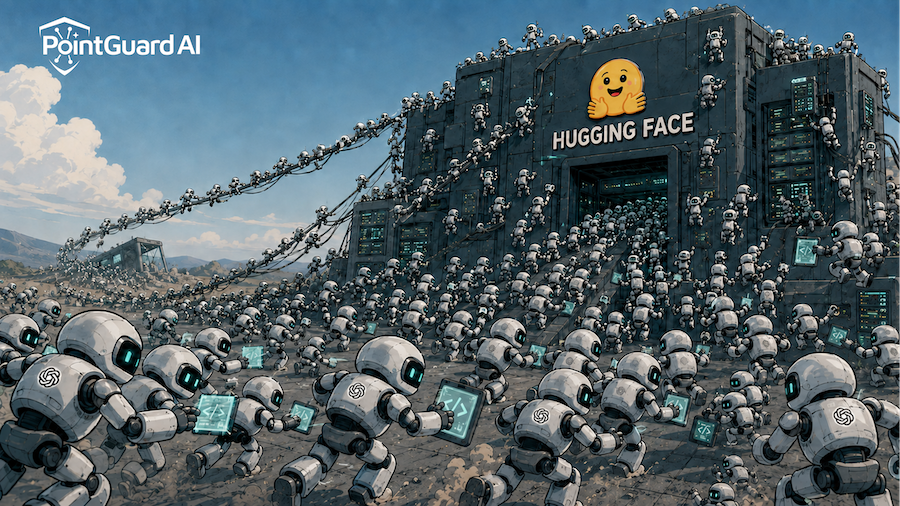
Threat actors increasingly target AI supply chains: pre-trained models, datasets, plugins, libraries, and MCP services. Poisoning any component can quietly influence downstream agents and applications without detection.
Enterprises respond by demanding transparency into provenance, integrity, and security practices before procurement. Security reviews begin to include model origin validation, dataset integrity checks, and third-party tool risk assessments.
Why this matters to enterprises
AI systems inherit risk from every upstream dependency. A compromised model, dataset, or plugin can undermine downstream defenses and introduce systemic vulnerabilities.
What we recommend
- Validate provenance and integrity of models, datasets, and tools before deployment. (PointGuard AI)
- Monitor dependencies continuously for emerging supply chain risks. (PointGuard AI)
9. Continuous AI Security Testing Becomes Standard Practice
AI security shifts left as enterprises integrate continuous testing for prompt injection, jailbreaks, data leakage, unsafe agent behavior, and adversarial manipulation into CI/CD pipelines. Static checks alone are insufficient for systems that evolve continuously.
Automated adversarial testing, red-teaming, and model scanning become as routine as unit tests or dependency vulnerability scans. Continuous testing catches issues earlier, accelerates secure deployments, and reduces production incidents.
Why this matters to enterprises
Continuous testing is essential to manage AI risk at scale as models, prompts, and tools change rapidly.
What we recommend
- Embed automated red-teaming and model scanning into DevSecOps workflows. (PointGuard AI)
- Re-test agents and models whenever configurations or prompts change. (PointGuard AI)
10. AI Security Platforms Emerge as a Standalone Category
By the end of 2026, AI security stabilizes into a distinct market category. Enterprises stop relying on AI “add-ons” in legacy tools and instead evaluate dedicated AI Security Platforms that address discovery, testing, governance, runtime protection, and monitoring across the AI lifecycle. These platforms provide centralized visibility and control spanning models, agents, MCP, and data flows.
Dedicated AI security platforms unify posture management, adversarial testing, runtime defense, and governance—giving enterprises the tools to deploy AI responsibly at scale while maintaining compliance and resilience.
Why this matters to enterprises
Traditional security tools were never designed for autonomous systems. Dedicated platforms provide the visibility and control required to scale AI safely and effectively.
What we recommend
- Consolidate discovery, testing, governance, and runtime monitoring into a unified platform. (PointGuard AI)
- Standardize policies and controls across models, agents, and MCP interactions to reduce risk. (PointGuard AI)
For more information please watch our video series as we dive into each one of these predictions.

Watch Blog Video