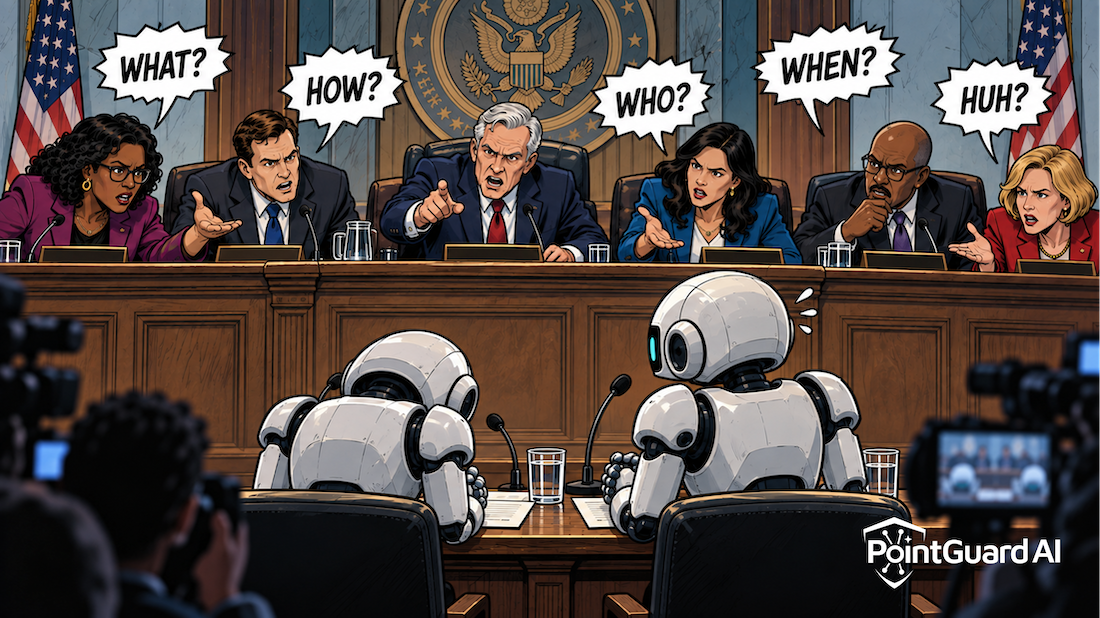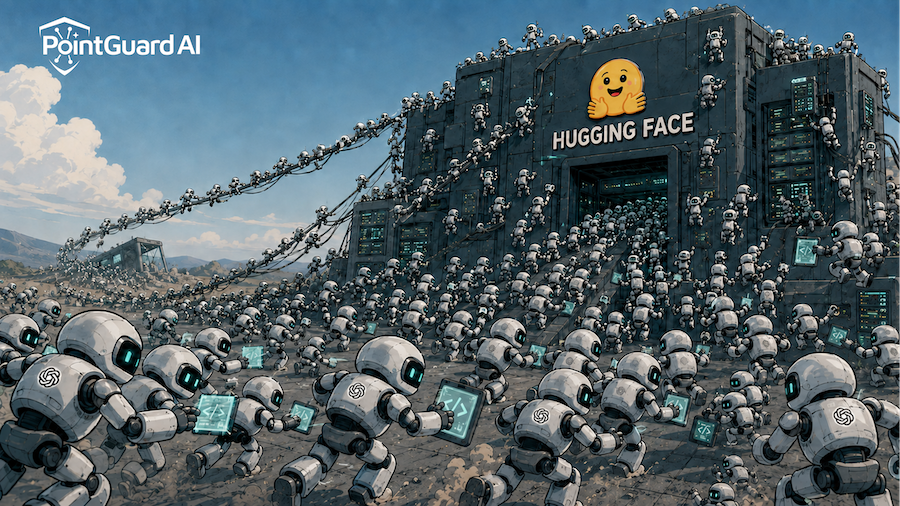
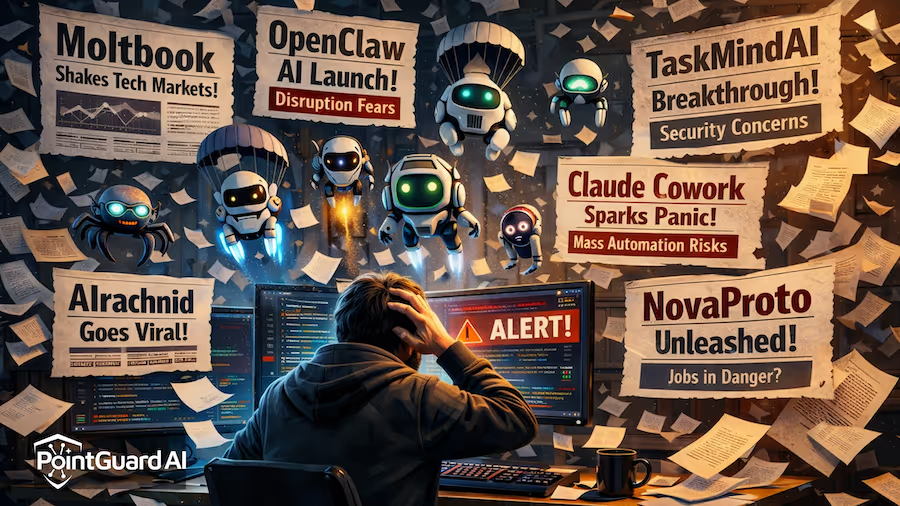
If you blinked, you missed the rise and partial implosion of Moltbook, a cascade of OpenClaw and Moltbot security issues, and the launch of Anthropic’s Claude Cowork, which triggered the kind of market whiplash that makes software executives suddenly remember what “existential risk” feels like.
Some people are calling Moltbook a security incident. Others are calling it a scam. Elon Musk called it the beginning of “the singularity.” Sam Altman called it a hoax.
The truth, predictably, is probably in the middle. And that’s exactly the point.
Whether Moltbook was truly autonomous agents or humans puppeteering them behind the scenes, the enterprise lessons are the same: agentic AI can create crises at unprecedented speed, and the security and governance gaps around it are not theoretical anymore.
The lesson from this should be to stop using agentic AI.
But we urgently need to stop using agentic AI like it’s a toy.
The New Reality: Agentic AI Moves Faster Than Your Org
The most important lesson from OpenClaw, Moltbot, and Moltbook is not the technical specifics of one CVE or another. It’s the tempo.
Traditional security incidents unfold in a familiar pattern: a vulnerability is discovered, someone publishes a proof-of-concept, defenders scramble, a patch is released, and exploitation either begins or doesn’t.
Agentic AI doesn’t follow that rhythm. It collapses the timeline.
When an agent platform gets compromised, the attacker isn’t just stealing data. They’re stealing automation. They’re stealing the ability to act, chain actions, and persist. And because agents are built to integrate with tools, systems, and workflows, the blast radius is exponentially larger.
That’s why OpenClaw token theft isn’t just session hijacking. In an agentic world, a stolen token can become a remote operator controlling a workflow engine. And that’s a fundamentally different kind of threat.
Even if Moltbook was partially staged, it demonstrated something real: public perception can shift instantly, and the reputational damage can be as disruptive as the actual security failure.
Moltbook: Scam, Hoax, or Security Wake-Up Call?
Moltbook’s story is a perfect microcosm of where the AI industry is right now.
It launched with a provocative pitch: an AI-only social network where autonomous agents post, argue, collaborate, and form “relationships,” while humans watch from the sidelines. It went viral. People speculated it was the first glimpse of real multi-agent intelligence at scale.
Then came the breach story: database misconfiguration, exposed tokens, leaked agent session records, and the possibility of agent hijacking. Security researchers piled on, warning about prompt injection, malicious instruction propagation, and agent-to-agent compromise.
Then came the counter-narrative: maybe the agents weren’t autonomous at all. Maybe they were being guided by humans. Maybe it was a performance. A scam. A hoax.
So, what should enterprises conclude? Not “Moltbook was fake.”
A more useful conclusion is that AI-driven systems can generate massive hype, massive fear, and massive disruption, all before the average enterprise security team even has time to open a ticket.
That is not a Moltbook problem. That is the new reality.
OpenClaw and Moltbot: The Agent Control Plane Is the New Crown Jewel
OpenClaw and Moltbot were already risky in the way that is typical of many early-stage agent platforms. They’re designed to get to the market first, regardless of security. They want developers to plug in tools, chain actions, and let the agent run.
That’s the value proposition. But it’s also the threat model.
The recent wave of OpenClaw and Moltbot security news exposed a familiar pattern: the control plane is too exposed, the session tokens are too powerful, and the ecosystem around “skills” and extensions are too easy to poison.
In the old world, malicious plugins were annoying. In the agentic world, malicious plugins are catastrophic. Because skills aren’t just UI add-ons. They are capabilities, with broad permissions that can autonomously take actions.
And when attackers can upload hundreds of malicious skills that steal credentials or drop malware, they aren’t just targeting hobbyists. They’re targeting the future enterprise workflow layer. That’s why “skills gone rogue” isn’t a niche story. It’s an ominous preview.
Claude Cowork: The Other Kind of Disruption
If Moltbook and OpenClaw represent the security and governance risk, Claude Cowork represents the economic shock.
Anthropic’s launch of Claude Cowork sent a message loud enough to spook an entire category of software companies: the AI assistant is no longer a feature. It’s becoming the interface.
For many SaaS vendors, the nightmare scenario isn’t that AI replaces their product outright. It’s that AI replaces the reason users open their product.
The agent becomes the “front door,” and the SaaS becomes a back-end API.
That’s why you saw such a steep downturn across companies whose value proposition depends on being the primary workflow surface: project management tools, customer support platforms, knowledge bases, internal search tools, CRMs, and even developer productivity products.
Claude Cowork didn’t break these companies overnight. But it forced investors and executives to confront something uncomfortable: the competitive battleground is shifting, and the shift is happening fast.
The Security Lessons Enterprises Should Learn
Here are the real lessons that matter, and should spur serious thought and action.
1) Agentic AI Can Trigger Crises at Unprecedented Speed
The biggest shift is not capability. It’s velocity. Agent ecosystems can go from “interesting” to “incident” in days, hours, or even minutes.
Enterprises need playbooks for agent failures the same way they have playbooks for ransomware and cloud misconfigurations. Because the next crisis won’t wait for your quarterly review cycle.
2) AI Agents and Applications Must Be Governed
This is the part that many people don’t want to hear. Agentic AI is not a productivity toy you can roll out informally.
If you don’t govern:
- what tools agents can access
- what data they can retrieve
- what actions they can take
- how they authenticate
- how long tokens persist
- how outputs are logged
…you’re not innovating. You’re gambling.
3) Guardrails Must Become Mandatory Best Practices
The industry is past the point where “we’ll add security later” is acceptable.
Reasonable guardrails should be treated like seatbelts:
- least privilege by default
- strong token hygiene
- strict connector permissions
- safe skill marketplaces
- sandboxing and isolation
- audit logs that actually matter
Enterprises shouldn’t need a breach to justify this.
4) Regulators Should Focus on Practical Controls, Not Hype
The Moltbook saga is a cautionary tale for regulators too. If they chase headlines, they’ll miss the real risks. The immediate risks are not about AI is becoming sentient. They are more boring and concrete:
- misconfigured databases
- exposed tokens
- unsafe plugin ecosystems
- poor identity boundaries
- unmonitored autonomous workflows
That’s where the immediate existential threats lie.
5) Don’t Believe the Hype or the Doom
The AI industry is now a machine that produces extremes. Everything is either “the singularity” or “a hoax.” Everything is either “the end of software” or “just another tool.”
Reality is in between, and the hype is a distraction. But the fears are rooted in real weaknesses and genuine disruption. The job of enterprise leaders is to ignore the noise while taking the underlying risks seriously.
6) Don’t Slow Innovation, But Build Security in Parallel
Enterprises should not pull back from AI innovation. That would be a strategic mistake, and frankly impossible. But building AI fast without adequate security is a lose-lose situation. We find ways to build both innovative AI tools, and robust security in parallel. This is the new cost of doing business.
7) Healthy Skepticism About AI Replacing Legacy Tools
Claude Cowork is disruptive, but it won’t replace every legacy tool. AI will not magically eliminate your CRM, your ticketing system, your ERP, or your compliance stack, but it will make them easier to access and manipulate.
The enterprise winners will be the ones who adopt AI aggressively, while keeping enough skepticism to demand proof of usefulness, security, and governance.
The Bottom Line
Moltbook, OpenClaw, Moltbot, and Claude Cowork are not unreleate stories.
They show that agentic AI is accelerating innovation, accelerating disruption, and accelerating security risk all at once.
Enterprises don’t need to panic, but they do react deliberately. The next “Moltbook moment” might not be a viral AI social network. It might be your internal agent platform, running quietly in production, with access to your systems, your data, and your workflows.
And by the time you notice that something has gone wrong, it might already be too late.
Sources
Here are some credible sources you can cite in the blog to support the news and commentary in your piece:
OpenClaw / Moltbook / Agentic AI Security
- Security concerns and skepticism are bursting the bubble of Moltbook, the viral AI social forum. (AP News)
- Researchers exposed 35,000+ emails, thousands of private DMs, and 1.5 million API tokens due to a backend misconfiguration. (Business Insider)
- IBM Security Intelligence podcast on why defenders need to pay attention to agentic AI attack surfaces, from key exposure to malicious skills. (IBM)
- Claude Cowork explained: Anthropic’s AI tool, plugins that spooked markets. (Business Standard)
- Why one Anthropic update wiped billions off software stocks (Fast Company)

Watch Blog Video